Things to Do
The abbeys of Yorkshire, and the castles that guard them
No English county wears its monastic history like Yorkshire. Around the North York Moors alone you can stand in the greatest Cistercian ruin in the country, climb to a clifftop abbey that gave Dracula its setting, and walk into a hermit monk's own front garden. Here are the four abbeys worth planning a trip around, the three castles to add to them, and how to see them without spending the day in the car.
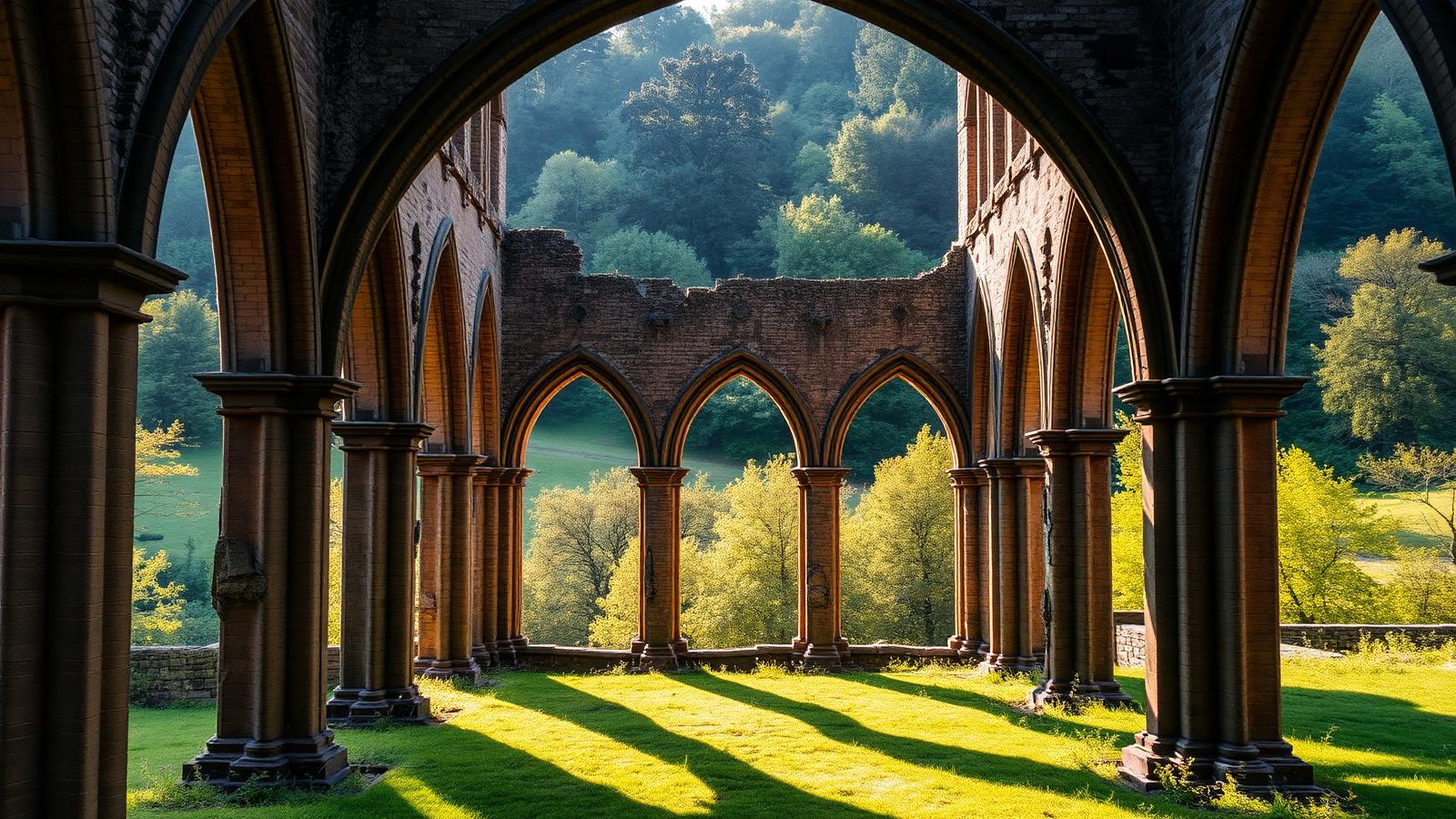
Why Yorkshire has so many abbeys
In the 12th century the north of England was, to the reforming monastic orders, close to empty, wild, under-settled and cheap. The Cistercians in particular sought exactly that: remote valleys far from towns where they could farm sheep and pray in silence. The dales cutting into the North York Moors were perfect. Within a few decades Rievaulx, Byland and their daughter houses were among the wealthiest institutions in the country, running vast flocks across the moor tops you drive over today. Henry VIII's dissolution in the 1530s emptied them all, and what the roofless centuries left behind is the reason people still come.
The four great abbeys, ranked
1. Rievaulx Abbey
Rye valley, 3 miles north-west of Helmsley · English Heritage
The most complete and majestic monastic ruin in England, and the first great Cistercian house in the north.
Allow two to three hours with the museum. Parking on site; the walk over from Helmsley Castle along the Cleveland Way is one of the best short walks in the park.
2. Whitby Abbey
Clifftop above Whitby harbour, east coast · English Heritage
The most dramatically sited abbey in Yorkshire, and the one that put the Gothic into Dracula.
Climb the 199 steps from the harbour, or use the abbey car park at the top. Busy in school holidays; late afternoon light is the best for photographs.
3. Byland Abbey
Near Coxwold, beneath the Hambleton Hills · English Heritage
The half-rose window and the largest area of medieval floor tiles still in their original setting in the country.
Quiet even in summer, and small enough for an hour. The tiles are covered over winter to protect them; the pub opposite makes it an easy lunch stop.
4. Mount Grace Priory
Near Osmotherley, western edge of the moors · English Heritage / National Trust
The best-preserved Carthusian monastery in England, where monks lived as hermits in their own cells and gardens.
The reconstructed two-storey cell is the thing to see. Combine it with the Cleveland Way above Osmotherley for a half-day.
Rievaulx Abbey in detail
Near Helmsley, in the wooded valley of the River Rye, Rievaulx was founded in 1132 as the first great Cistercian abbey in the north, and reached its height under the revered abbot St Aelred, when several hundred monks and lay brothers lived here. The presbytery arcades still stand almost to their full height, and because the valley runs the wrong way the church was built on a north-south axis rather than the usual east-west, a detail you notice as soon as the light comes through. The museum holds some of the finest monastic sculpture in the country. Above it, Rievaulx Terrace is an 18th-century landscaped walk built purely to look down on the ruin.
Whitby Abbey in detail
The clifftop ruin above Whitby has been a landmark for more than 1,300 years. The first monastery here, founded in 657 under the abbess Hild, was where Caedmon composed the earliest English poem we know by name, and where the Synod of Whitby settled the date of Easter for the English church. The stone shell you see now is the 13th-century Benedictine rebuild, shelled by German battlecruisers in 1914 and still standing. Bram Stoker, on holiday in the town, put Dracula ashore beneath it. Climb the 199 steps from the harbour for the proper approach. See our full Whitby Abbey guide for tickets, opening times, the clifftop car park and dogs.
Byland and Mount Grace
Beneath the Hambleton Hills near Coxwold, Byland was one of the most ambitious Cistercian churches of 12th-century Europe, its great rose window is said to have influenced York Minster's, and it holds the largest collection of medieval floor tiles still in their original setting, covered over in winter to protect them. Near Osmotherley, Mount Grace Priory is a different world entirely: the best-preserved Carthusian monastery in England, where monks lived alone in two-storey cells around a huge cloister, food passed to them through an angled hatch so they never saw another face. One cell and its garden have been reconstructed, and it explains the life better than any display board could.
The castles
- Helmsley Castle, Dramatic double ditches and a great tower split in half when it was slighted after the Civil War, right beside the market square. More nearby
- Pickering Castle, A textbook Norman motte-and-bailey used by medieval kings as a hunting lodge, with wide views over the town and the steam railway. More nearby
- Scarborough Castle, A headland fortress with 3,000 years of occupation behind it, splitting Scarborough's two bays. Just off the park's south-east corner. More nearby
Two itineraries that work
The western day: Rievaulx first thing before the coaches, lunch in Helmsley, Helmsley Castle in the afternoon and Byland on the way home over Sutton Bank. The coastal day: Whitby Abbey early, down the 199 steps for fish and chips, then the cliffs at Robin Hood's Bay. If you have a third day, Mount Grace pairs with a stretch of the Cleveland Way above Osmotherley. For a wider plan, see our weekend itinerary.
Planning your visit
Nearly all of these are English Heritage sites with seasonal opening and admission charges; members go free, and National Trust membership covers some sites too. Opening hours shorten sharply from November to March and several sites close on weekdays in winter, so check the official site before you travel. Parking at Rievaulx and Byland is limited, and Whitby is best reached on foot from the town. To base yourself among them, see where to stay.
Frequently asked questions
- How many abbeys are there in Yorkshire?
- Yorkshire has the richest monastic heritage in England, with more than a dozen substantial abbey and priory ruins. Around the North York Moors the great four are Rievaulx, Whitby, Byland and Mount Grace, with Fountains, Jervaulx and Bolton lying further west in the Dales.
- What is the most impressive abbey in Yorkshire?
- Fountains Abbey near Ripon is the largest, but within the North York Moors Rievaulx is the finest. Often described as England's most complete and majestic abbey ruin, set in a wooded valley below the moor.
- Is Whitby Abbey linked to Dracula?
- Yes, the clifftop ruin inspired part of Bram Stoker's Dracula, and the novel's 199 steps still climb from the town to the abbey.
- Which North York Moors castles can you visit?
- Helmsley Castle and Pickering Castle, both English Heritage sites in their market towns, are the main ones, with Scarborough Castle on the coast nearby.
- Do you have to pay to visit the Yorkshire abbeys?
- Most are English Heritage sites with admission charges and seasonal opening; members of English Heritage go free, and National Trust members get free entry to some sites. Check current times and prices on the official site before travelling.
- Can you see several abbeys in one day?
- Yes. Rievaulx and Byland are 20 minutes apart on the western side and pair easily with Helmsley Castle; Whitby and Scarborough make a natural coastal pair. Trying to do the western abbeys and the coast in one day is a lot of driving.
Stay among the ruins
A base in the south of the park puts Pickering, Helmsley, Rievaulx and the coast all within an easy drive.
Browse places to stay