Villages & Places
Helmsley
Helmsley, North Yorkshire, is the handsome market town at the western gateway to the North York Moors. The only market town inside the national park, and often called “Yorkshire's answer to the Cotswolds.” Honey-stone streets, a bustling market square, a dramatic medieval castle, a beautiful walled garden and some of the best food in the area make it one of the moors' most rewarding places to visit or to base yourself.
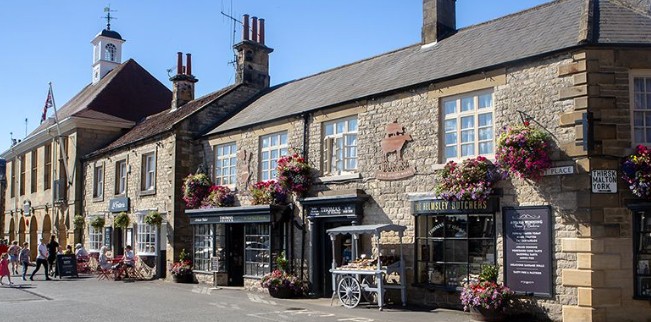
The market town
Helmsley grew up where the dales meet the Vale of Pickering, on the River Rye, and it has been a market town since it received its charter in 1191. Life still centres on the handsome Market Place, with its old market cross and the tall Feversham monument, where a traditional market is held every Friday. Around it are independent shops, delis, tea rooms and old coaching inns; the square is also a well-known gathering point for motorcyclists riding the scenic roads over the moors.
Helmsley Castle
The ruined medieval castle stands on a rise just off the market place, its tall, keep-like east tower still dominating the town. Begun in the 12th century and strengthened over the years, it was later part-converted into a comfortable Elizabethan mansion, the West Range, with fine oak panelling and plasterwork, before being slighted (deliberately damaged) after it surrendered to Parliament in the Civil War in 1644. It's in the care of English Heritage, with displays telling five centuries of its story and a dramatic double dry moat to walk. Check opening times and admission on the English Heritage website.
Helmsley Walled Garden
Right beside the castle lies Helmsley Walled Garden, a five-acre walled garden first laid out in 1758 to grow fruit, vegetables and flowers for nearby Duncombe Park. Left to decay, it was lovingly restored from 1994 and is now a peaceful, productive haven of Victorian greenhouses, clematis, fruit trees and rare plants, with the Vine House Café serving the garden's own produce. Usually open spring to autumn, check ahead.
Duncombe Park
A short walk from the centre, Duncombe Park is the grand country house of the Feversham family, built in 1713 and set in more than 450 acres of gardens, sweeping parkland and a National Nature Reserve of ancient trees. The parkland and gardens open seasonally (the house itself isn't generally open to visitors), and the estate is home to the National Centre for Birds of Prey, with daily flying displays. Check current opening on the estate's website.
The Cleveland Way and Rievaulx Abbey
Helmsley is the official start of the Cleveland Way, the 109-mile National Trail that horseshoes around the moors and along the coast to Filey. Its very first stretch is one of the loveliest: about three miles through woods and pasture to Rievaulx Abbey, the magnificent ruins of a great Cistercian monastery founded in 1132 and dissolved by Henry VIII. Above the abbey, the National Trust's Rievaulx Terrace offers a famous landscaped view down over the ruins.
Food and drink
Helmsley has a real reputation as a foodie town, sometimes dubbed a “capital of cake”, with excellent independent bakers and delis, its own small brewery, and everything from tea rooms to celebrated restaurants and hotel dining. See our food and drink guide for how to eat well across the moors.
Using Helmsley as a base
Helmsley makes a natural base for the western moors and Ryedale: the escarpment and famous view at Sutton Bank lie about eight miles west, with Hutton-le-Hole, Ampleforth and the market town of Kirkbymoorside all close by, and the coast within reach for a day out. Our planning pages can help you shape the days.
Getting here and parking
Helmsley is on the A170 between Thirsk and Scarborough, about 40 minutes from York. There's no railway station, the nearest are at Malton or Thirsk, but buses run from York, Pickering and Scarborough. There's pay-and-display parking in and around the centre, a short walk from the castle and market place.
Where to stay
With this much on the doorstep, Helmsley rewards more than a flying visit, see where to stay for a base. If you are choosing between the western and eastern ends of the park, see Helmsley or Pickering.
Helmsley FAQs
What is Helmsley known for?
It's the only market town within the North York Moors National Park, known for its medieval castle, the walled garden, Duncombe Park, its Friday market and its food scene, and as the start of the Cleveland Way.
How far is Rievaulx Abbey from Helmsley?
About three miles; you can walk there along the first stretch of the Cleveland Way (roughly 1.5 hours each way) or drive.
Where does the Cleveland Way start?
At Helmsley, by the castle; the 109-mile National Trail loops around the moors and coast to Filey.
Is there a market in Helmsley?
Yes, a traditional market is held every Friday in the Market Place.
Is Helmsley worth visiting?
Very much so, the castle, walled garden, food and walking easily fill a day, and it's a good base for the western moors.