Villages & Places
Malton, North Yorkshire: a visitor guide
By Jon Cosson · Updated 18 October 2026
Malton is a Georgian market town midway between York and Scarborough. It sits on the River Derwent, facing Norton-on-Derwent across the river. There is a Saturday street market, a monthly food market and a range of independent food producers. This guide covers market days, the museum, places to eat and nearby days out.
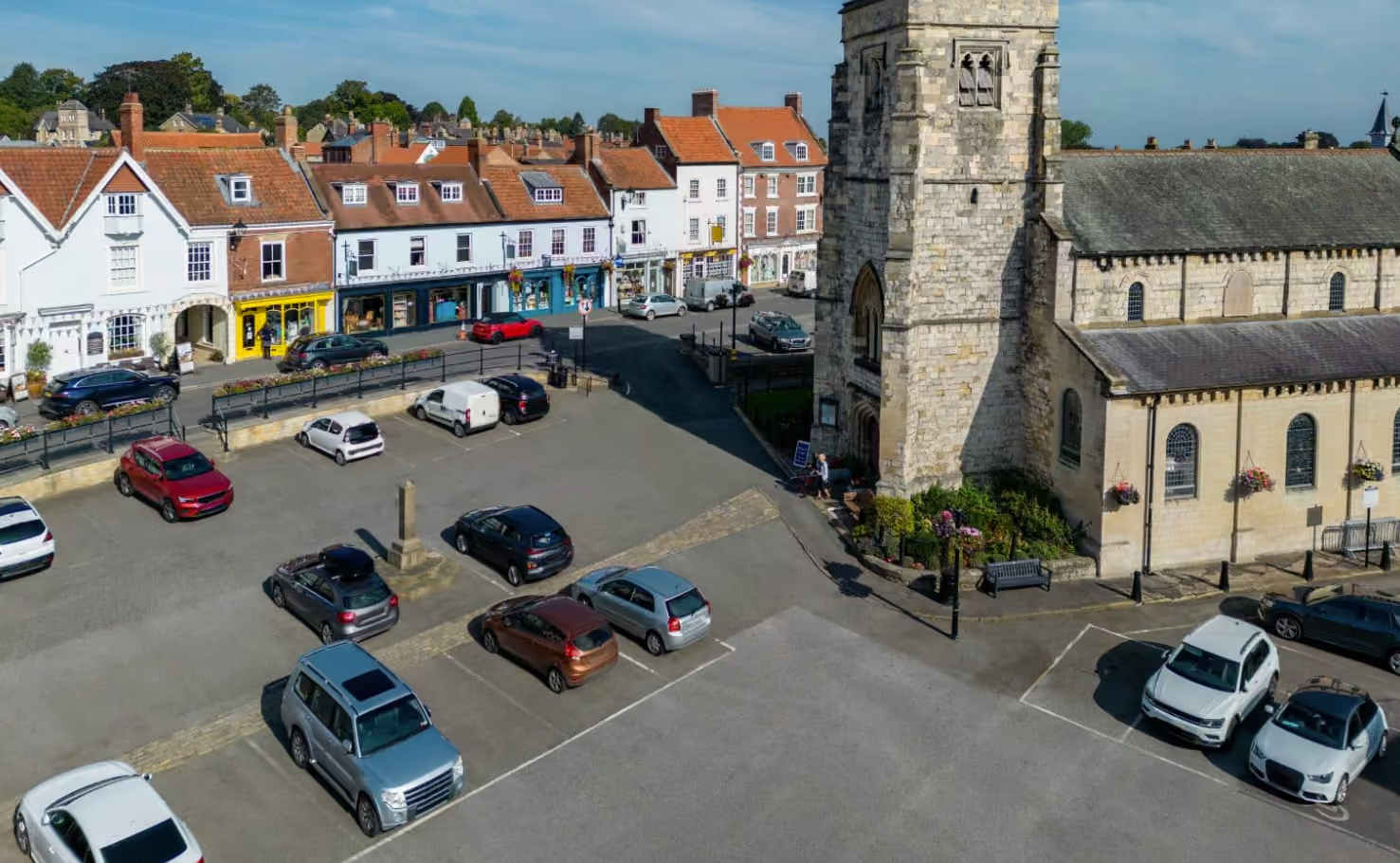
Malton Market Place and St Michael's Church, at the heart of the town.
Malton at a glance
- Weekly market
- Saturdays in the Market Place, 9am to 2.30pm
- Monthly food market
- Second Saturday, March to November, 9am to 3pm
- Known for
- Independent food producers and Talbot Yard
- Nearby
- Castle Howard, Eden Camp, Flamingo Land
- Getting here
- On the A64 between York and Scarborough; trains via Malton station
Malton market
Two different markets get called “Malton market”, which causes a good deal of confusion. They are not the same thing.
The traditional Saturday market runs in the Market Place (YO17 7LR), usually from around 9am to 2.30pm. Stalls sell gifts, clothing, homeware, plants and food. Entry is free. Livestock markets run on Tuesdays and Fridays. Market Place parking is free for up to two hours. Check the signs and market-day restrictions before leaving your car. See North Yorkshire Council's Malton market information.
The Malton Monthly Food Market is the one the town is known for. It is held on the second Saturday of the month, from March to November, roughly 9am to 3pm, and fills the Market Place with specialist producers, street food and cookery demonstrations. It does not run over the winter months, which catches people out.
Both markets are organised locally and dates can shift for bank holidays, weather or event clashes. Before travelling specially, check the current listings on visitmalton.com, which is the official source for the town.
Why Malton is called the food capital of Yorkshire
The short answer: it is a promotional title the town adopted, not an official designation, and it has stuck because there is something behind it. The phrase grew up around the monthly food market, which the Italian chef and food writer Antonio Carluccio publicly supported and helped bring attention to. What keeps it credible is the concentration of independent food businesses in a town of roughly five thousand people: a courtyard of artisan producers at Talbot Yard, a butcher with a national reputation for pork pies, a brewery, a gin distillery, a cookery school and an annual food festival. Whether it deserves the crown is a matter for debate in every other Yorkshire market town. For a visitor it simply means the eating is better than the size of the place would suggest. See where to eat in Malton.
A historic market town
The heart of Malton is its circular, gently sloping Market Place, with St Michael's Church and the old town hall in the centre, Georgian shopfronts ringing it and longer shopping streets running off beyond. The town's roots are Roman: the fort and settlement of Derventio, remembered in the grassy earthworks at Orchard Fields. The green space of Castle Gardens occupies the site of the vanished Malton Castle. Malton is also a racehorse-training town, with trainers and strings of horses in the surrounding countryside, which is why it is sometimes called the Newmarket of the North. Charles Dickens visited a friend here, and the friend's office is traditionally said to have inspired Scrooge's counting house in A Christmas Carol. More in our guide to things to do in Malton.
Malton Museum
Malton Museum is at 36 Yorkersgate, YO17 7AB. Its two rooms cover the town from the Roman fort of Derventio through medieval finds to the Georgian period.
Visit Malton listed the 2026 season from 4 April until early November, thursdays to saturdays, 10.30am to 3.30pm. Check before visiting, especially near the end of the season. See Visit Malton for visitor information.
Independent shops and antiques
Beyond food, Malton has independent shops, art galleries, craft studios and antique dealers tucked into its historic buildings, and it rewards a slow browse. See shops and shopping in Malton.
The gateway to the moors and coast
Malton is well placed. Castle Howard, the Baroque house used for Brideshead Revisited and Bridgerton, is about 15 minutes away, and the Eden Camp wartime museum, Flamingo Land, Scampston Walled Garden, Kirkham Priory and the Howardian Hills all sit close by. Castle Howard sits just outside the National Park boundary, and its Christmas season draws visitors from far afield; our guide to the moors at Christmas has this year's dates and ticket prices. The town is also a gateway to the North York Moors: neighbouring Pickering is about 15 minutes north, Dalby Forest a little beyond it, and the coast at Whitby and Scarborough is an easy drive, with York in the other direction.
Getting here and parking
Malton sits on the A64 midway between York and Scarborough. Trains run on the York to Scarborough line from the station just across the river in Norton, and Coastliner buses run through to Pickering, Whitby and Scarborough. There are short-stay and long-stay car parks in town, and the centre is compact enough to walk from any of them. Malton has a reputation as a dog-friendly town, with water bowls outside many shops.
Explore Malton: the full guide
Three companion guides go deeper: things to do in Malton, covering the museum, the Roman fort, the churches and the big days out nearby; where to eat in Malton, covering the restaurants, pubs, cafés and Talbot Yard; and shops and shopping in Malton, covering the independents, the antiques and the food shops.
Malton: frequently asked questions
When is Malton market day?
Malton's traditional street market runs every Saturday in the Market Place, roughly 9am to 2.30pm, with general stalls rather than food alone. Separately, the Malton Monthly Food Market takes over the Market Place on the second Saturday of the month from March to November, 9am to 3pm. Market arrangements do change, so confirm on visitmalton.com before you set off.
Why is Malton called the food capital of Yorkshire?
The name is a local promotional title rather than an official designation. It grew out of the town's monthly food market, which the Italian chef Antonio Carluccio publicly backed, and it stuck because Malton has an unusually dense cluster of independent food businesses for a town of its size: the Talbot Yard producers, a well-known butcher, a brewery, a distillery and a long-running food festival.
What is there to do in Malton?
Malton Museum and the Roman earthworks at Orchard Fields, Castle Gardens, the circular Market Place and its churches, riverside walks along the Derwent, and the food businesses around Talbot Yard. Castle Howard, Eden Camp, Flamingo Land and Scampston Walled Garden are all short drives away.
How far is Malton from Castle Howard, York and Pickering?
Castle Howard and Pickering are both around 15 minutes by car, and York is about 40 minutes along the A64. Trains run to York and Scarborough from the station just across the river in Norton.
Is Malton worth visiting?
It suits a half-day or full day, particularly if food interests you. It is a Georgian market town with Roman roots, a concentration of independent producers, shops and places to eat, and a position that puts Castle Howard, the North York Moors and the coast within easy reach.
Where to stay
Malton and the villages around it offer hotels, inns, bed and breakfasts and self-catering cottages, and the town's position makes it a flexible base for York, the Howardian Hills, the moors and the coast. See our where to stay guide.
Nearby
Stay near Malton
Malton makes a comfortable base with York, Castle Howard, the North York Moors and the coast all within easy reach.
Browse places to stay