Things to Do
Horse riding in the North York Moors
More than 800km of bridleways, beaches you can ride at either end of the park and four long routes with real history to them. This page gathers what the National Park publishes about riding here and joins it up, because until now nobody had.
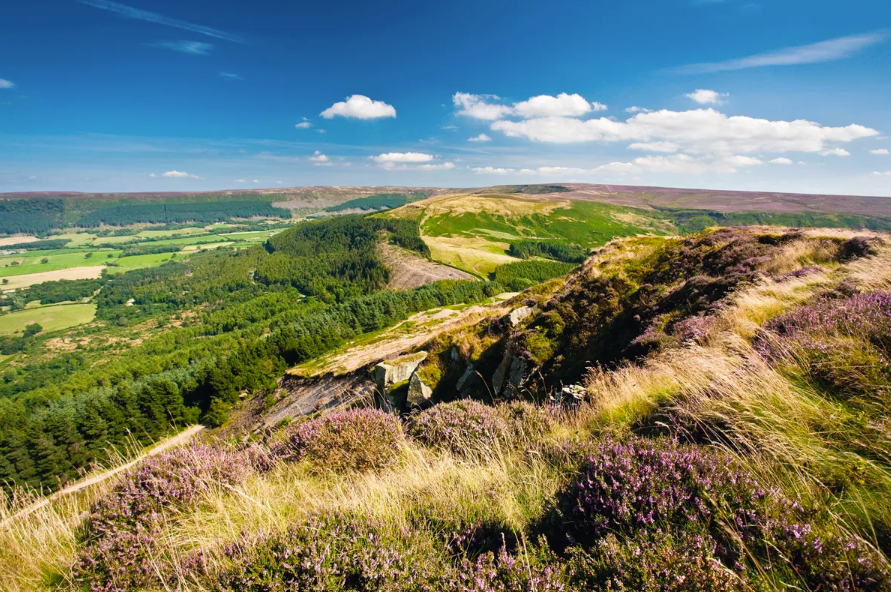
Open moorland, the ground most of the bridleway network crosses.
Horse riding in the North York Moors at a glance
- Bridleways in the park
- More than 800km, 500 miles, per the National Park
- Public rights of way
- Around 2,200km, 1,400 miles, shared by walkers, horse riders and cyclists
- Where riders must stick to
- Bridleways, byways and restricted byways, on the National Park's own instruction
- Named long routes
- Four: St Aelred's Pilgrim Trail, the North York Moors and Dales Ride, the Rosedale Loop and the Cinder Track
- Forests open to riders
- Dalby, Cropton, Harwood Dale, Broxa and Langdale
- Beaches open to riders
- Saltburn and Sandsend
- Trekking and riding centres
- Four named by the National Park; we have checked none of them
- Horsebox and trailer parking
- The practical gap nobody fills yet, including us
Let us be plain about what this page is. We walk these moors and we drive them, and we say so all over this site. We do not ride, and nothing here should imply otherwise. What we have done is gather what the North York Moors National Park Authority publishes about horse riding and join it up in one place, because it was scattered and, in places, effectively unfindable. The riding itself is not ours. Corrections from people who do ride here are wanted, and they will be credited: if something on this page is wrong on the ground, tell us.
Where you may ride, and where you may not
This is the part people get wrong, and getting it wrong does not earn you a wrong turn, it earns you a confrontation with a landowner. The National Park's own horse riding page states that riders must stick to bridleways, byways and restricted byways, and that riders should ride carefully around livestock to avoid spooking animals. That is the whole instruction, and we are not going to improvise beyond it.
One further rule the National Park states works in riders' favour: on shared trails, cyclists must give way to horse riders. The full network, including which paths carry which rights, is on the National Park's rights of way pages, which is where we would send anyone planning beyond the routes named below.
The named routes
Four routes can be named with confidence, because the National Park or the British Horse Society publishes each of them.
St Aelred's Pilgrim Trail is a 50-mile route linking 12 churches in Helmsley and Upper Ryedale to Rievaulx Abbey. The North York Moors and Dales Ride is a 55-mile circular, four-day route from the British Horse Society. The Rosedale Loop is reached by a free annual permit from the Spaunton Estate; the National Park publishes a telephone number for the estate office, which we deliberately do not republish here, because numbers change and a dead number is worse than none. The National Park's page has the current contact.
The Cinder Track, the former Scarborough to Whitby railway, is a riding route as well as a walking and cycling one, and it is the gentlest 21 miles on this list. Our Cinder Track guide covers the surface, the access points and the tea rooms along it.
Forests and beaches
Forest riding is permitted at Dalby, Cropton, Harwood Dale, Broxa and Langdale forests. Dalby is the one set up for a day out, with parking, a visitor centre and waymarked trails of every grade, and our Dalby Forest guide covers the practical side. On the coast, the beaches at Saltburn and Sandsend permit horse riders; Sandsend sits at the seaward end of our Whitby to Sandsend walk, if the non-riders in the party want their own route.
We state no permit requirement, seasonal restriction, tide rule or time-of-day rule for any forest or beach here, because we have not verified any, and they are exactly the kind of thing that varies. The National Park's tide-times advice applies at the beaches.
Trekking and riding centres
Four centres are named by the National Park: Bilsdale Riding Centre at Hawnby, Boltby Pony Trekking and Trail Riding Centre, Borrowby Equestrian Centre near Staithes, and Friars Hill Riding Stables at Sinnington. We have checked none of them, so there are no prices, opening times, lesson types, age or weight limits here, and no claims about what any of them offers. The National Park's page carries the listings. Friars Hill also appears on our guide to accessible days out, because the National Park lists it under accessible outdoor activities.
Horseboxes and trailers: the gap we are working on
The National Park's page does not say where you can park a horsebox or a trailer, and neither, as far as we can find, does anyone else. That is the practical problem nobody addresses, and it is the same gap we have just started filling for caravans and motorhomes. We do not have the answer yet, and we will not invent one.
What we can say is that the road constraints that stop a caravan apply to anything long and heavy, and a towed horsebox is both. Sutton Bank is prohibited to caravans and trailers, Rosedale Chimney Bank is around one in three with hairpins, and the old-town streets at Whitby, Robin Hood's Bay and Staithes are hopeless in anything long. The full picture, the banned roads, the punishing ones and the places you cannot turn round, is on our caravans and motorhomes page.
We name no car park as horsebox-suitable, not one, until we have stood in it. If you ride here and you know the good places to park an outfit, please tell us. We are working on this, and first-hand knowledge from people who tow here is the only honest way to fill the gap.
What we do not know yet
A wrong riding fact is worse than no riding fact: it sends someone down a byway with a horse, or onto a beach at the wrong state of the tide. So here, plainly, is what this page does not know. We do not know where horsebox and trailer parking exists anywhere in the park. We do not know of any permit, season or tide restriction for the forests or the beaches beyond the National Park's tide-times advice. We do not have the statutory definitions of the rights of way categories, and we will not improvise the law. We know nothing about the four riding centres beyond their names and places. We do not know whether the Rosedale Loop permit carries conditions. We do not know whether any of the long routes have off-road stabling or overnight arrangements.
We are working on all of it, and the fastest way to make this page better is you. If you ride these routes, or you find something here wrong on the ground, please tell us. Corrections from people who ride here will be credited, and they are what no official page can copy.
Horse riding in the North York Moors: FAQs
Can you go horse riding in the North York Moors?
Yes, and on a generous scale. The North York Moors National Park has more than 800km, 500 miles, of bridleways, and around 2,200km, 1,400 miles, of public rights of way that give walkers, horse riders and cyclists access to the park. The National Park calls the area a superb choice for a day's exploring on horseback or a trekking holiday, and this page joins up what it publishes.
Where can you ride a horse in the North York Moors?
The National Park's own instruction is that riders must stick to bridleways, byways and restricted byways, and ride carefully around livestock to avoid spooking animals. Beyond the bridleway network, riding is permitted at Dalby, Cropton, Harwood Dale, Broxa and Langdale forests, and the beaches at Saltburn and Sandsend permit horse riders. The four named routes on this page are all ridden routes.
How many miles of bridleway are there in the North York Moors?
More than 800km, 500 miles, of bridleways in the National Park alone, according to the National Park Authority. Around that sits a wider network of some 2,200km, 1,400 miles, of public rights of way, which give walkers, horse riders and cyclists access to the park.
Can you ride on the beach at Sandsend or Saltburn?
The National Park lists the beaches at Saltburn and Sandsend as open to horse riders. It asks riders to check tide times beforehand, which is advice worth taking whatever the activity. We have not verified any seasonal restriction or time-of-day rule for either beach, and we will not guess one.
Can you ride in Dalby Forest?
Yes. Forest riding is permitted at Dalby, along with Cropton, Harwood Dale, Broxa and Langdale. We have not verified any permit requirement, seasonal restriction or time rule for any of the forests, so check with Forestry England or the National Park before you travel if your plan depends on one.
Where can you go pony trekking in the North York Moors?
The National Park names four centres: Bilsdale Riding Centre at Hawnby, Boltby Pony Trekking and Trail Riding Centre, Borrowby Equestrian Centre near Staithes, and Friars Hill Riding Stables at Sinnington. We have checked none of them, so we publish no prices, opening times or claims about what any of them offers. The National Park's own page is the live list.
Do cyclists have to give way to horses?
Yes on the National Park's own terms: it states that cyclists must give way to horse riders on shared trails. Riders, for their part, are told to ride carefully around livestock. Between the two, the shared paths here work on the same courtesy as everywhere else in the park.
Planning around the outfit
Anything long and heavy faces the same roads here: Sutton Bank is out, Rosedale Chimney Bank is not worth the argument, and the old towns will not turn you round. The full picture is on our caravans and motorhomes page, and most of it applies to a horsebox too.
Browse places to stay