Things to Do
Whitby Abbey
By Jon Cosson · Updated 17 October 2026
A gaunt stone shell on a headland 200 feet above the harbour, visible from half the coast and from every deck of the moors behind it. Whitby Abbey is 1,300 years of English history. Hild, Caedmon, the Synod of Whitby, the Benedictines, the dissolution, a German shell in 1914. With Dracula bolted on at the end.
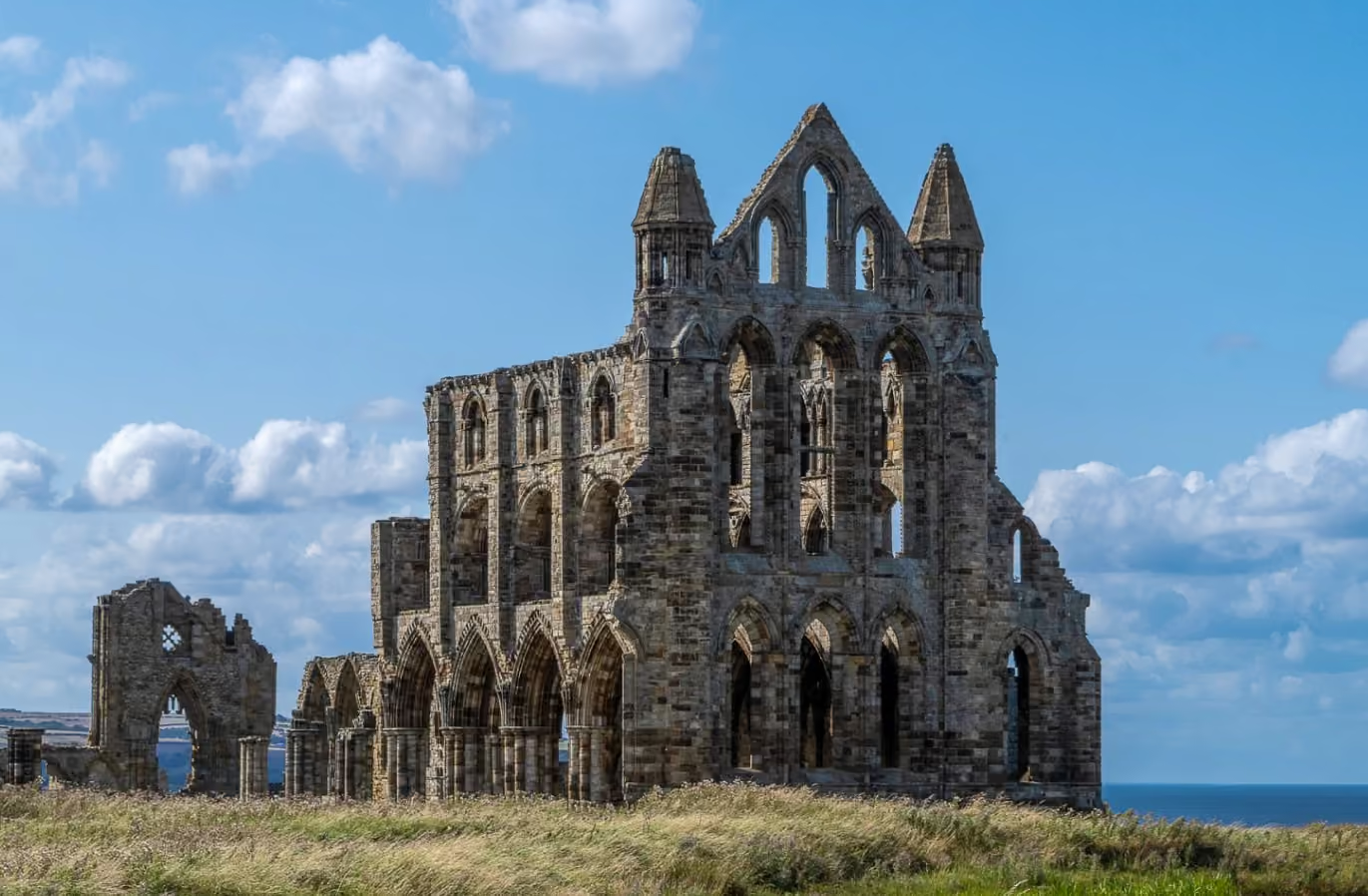
Whitby Abbey on the East Cliff, its Gothic arches open to the sea and sky.
What you are looking at
Two abbeys occupied this headland. The first, founded in 657 under the abbess Hild, was a double house of monks and nuns and one of the most important religious centres in Anglo-Saxon England: it hosted the Synod of Whitby in 664, which settled the date of Easter for the English church, and it was here that the cowherd Caedmon composed the earliest English poem we know by name. Viking raiders finished that community off in the ninth century.
The ruin standing today is the Benedictine rebuild, begun after the Norman conquest and largely thirteenth century in what you see now, the great east end with its tiers of lancet windows is the piece everybody photographs. Henry VIII dissolved the house in 1539; the buildings were quarried, the central tower fell in 1830, and in December 1914 German battlecruisers shelling Whitby knocked out much of the west front. It has been propped, surveyed and cared for ever since, now by English Heritage.
Alongside the ruin, the seventeenth-century Cholmley House holds the museum and visitor centre, with Anglo-Saxon finds, the story of Hild and Caedmon, and a good Dracula section. Outside, the ornamental pond gives the mirrored reflection shot that fills every postcard rack in town.
Tickets and opening
The abbey grounds, museum and visitor centre are ticketed by English Heritage, and members go free. Booking online in advance is cheaper than paying on the gate. Standard opening is daily from 10am with last entry half an hour before closing, and closing time pulls back through the winter, so treat any published figure as a starting point and confirm on the day.
Check the current prices and times on the official English Heritage page for Whitby Abbey. Events change everything: the autumn Whitby Abbey Illuminated evenings, the twice-yearly Goth Weekend and occasional filming can all close or extend the site.
You do not have to pay to see the ruin. From St Mary's churchyard, the top of the steps and across the harbour on the West Cliff it is free and, in the last hour of light, better. The ticket buys you the close view, the museum and the pond.
The car park or the 199 steps
There are two ways up, and they suit different visits.
The car park. A charged car park sits outside the abbey's south entrance on Abbey Lane, about 100 metres from the site. Council-run, not English Heritage, so a membership card buys nothing here. Postcode YO22 4JT. It is the sensible option with small children, poor knees or a lot of camera kit, and there are accessible bays plus a set-down point by the visitor centre. It fills by mid-morning in the school holidays; the approach through the East Cliff streets is tight.
The 199 steps. The proper arrival. They climb from Church Street in the old town, past the coffin rests, the flat landings where bearers set down a casket on the way to St Mary's, to the churchyard and then the abbey. There are genuinely 199 of them, they are wide and shallow rather than steep, and most reasonably mobile people manage with two or three pauses. They are slick in rain. Park in town instead: Church Street, the Marina or, in summer, the Park & Ride off the A171.
A good compromise on a busy day is to drive up, look round the abbey, then walk down the steps into the old town for lunch and back up for the car later, the descent is the view anyway.
Dogs
Dogs on leads are welcome in the abbey grounds (English Heritage). Dogs can also use the headland around the site, the churchyard path and the steps on a lead. For other places to visit with a dog in Whitby, see our dog-friendly stays and moors with dogs guides.
The Dracula connection, honestly
Bram Stoker came to Whitby on holiday in 1890, stayed on the West Cliff, and took three things from the town: the wreck of a Russian schooner in the harbour, which became the Demeter; the name Dracula, found in a library book on Wallachian history; and the geography of the East Cliff, up which the count bounds as a black dog after coming ashore. The abbey is scenery rather than a set piece in the novel, but it is the picture the book left behind, and the town has run with it, the graveyard walks, the Dracula Experience, and Goth Weekend every spring and autumn.
Making a day of it
The East Cliff works as a sequence: abbey first thing before the coaches, then St Mary's Church next door, whose extraordinary box-pewed, galleried interior is arguably the more remarkable building of the two, then the steps down to Church Street for fish and chips and the jet shops. Add the harbour and pier, or arrive by steam train from Pickering and skip the parking entirely. For the wider story of the moorland monasteries, see our abbeys and castles guide, and pair it with Rievaulx on the other side of the park.
Whitby Abbey FAQs
- How much does it cost to visit Whitby Abbey?
- Whitby Abbey is an English Heritage site with an admission charge covering the ruins, museum and visitor centre; members go free and booking online in advance is cheaper than paying at the gate. Prices change each season, so check the English Heritage page for Whitby Abbey before you travel rather than relying on a figure printed anywhere else.
- What are Whitby Abbey's opening times?
- The abbey is generally open daily from 10am with last entry half an hour before closing, and closing time shortens through the winter. Special events, Goth Weekend and the autumn illuminations can change the hours completely, so confirm the day's times on the English Heritage listing before setting off.
- Where do you park for Whitby Abbey?
- There is a charged car park outside the abbey's south entrance on the East Cliff, about 100 metres from the site, run by the local council rather than English Heritage. It fills early in school holidays. The alternative is to park in town, Church Street, the Marina or the Park & Ride off the A171, and climb the 199 steps instead.
- Do you have to climb the 199 steps to reach Whitby Abbey?
- No. The steps are the traditional approach from Church Street in the old town, past St Mary's Church, but you can drive up Abbey Lane to the clifftop car park and walk in on the level. If you want the climb without the crowds, go early or late in the day; the steps are wide, shallow and broken by landings.
- Are dogs allowed at Whitby Abbey?
- Dogs on leads are welcome in the abbey grounds (English Heritage). Dogs are also welcome on the surrounding headland, in St Mary's churchyard on a lead and on the 199 steps.
- Is Whitby Abbey really in Dracula?
- Yes, in part. Bram Stoker holidayed in Whitby in 1890 and used the town in the novel: the Demeter runs aground below the East Cliff and the count bounds up the 199 steps as a black dog. The abbey itself is scenery rather than a setting, but it is the image everyone carries away, and the reason the town holds Goth Weekend twice a year.
- How long do you need at Whitby Abbey?
- About an hour to an hour and a half for the ruin, the museum in Cholmley House and the pond that gives the classic reflection photograph. Add the 199 steps, St Mary's Church and fish and chips down in the harbour and you have a comfortable half day on the East Cliff.
Staying near the abbey
Whitby itself books up months ahead for half-term and Goth Weekend. Sleights, Ruswarp and Goathland are all within fifteen minutes and much easier to book. See our guide to the best base villages.
Browse places to stay