Villages & Places
Pickering
Pickering, North Yorkshire, is the handsome market town on the southern edge of the North York Moors. The “gateway to the Moors,” looking out over the Vale of Pickering. It packs a Norman castle, a church full of rare medieval wall paintings, the southern terminus of a famous steam railway and a proper Monday market into a walkable centre, and it makes one of the best bases for exploring this side of the park. This guide covers what to see and do, where to eat and where to shop, and how to use the town as a base.
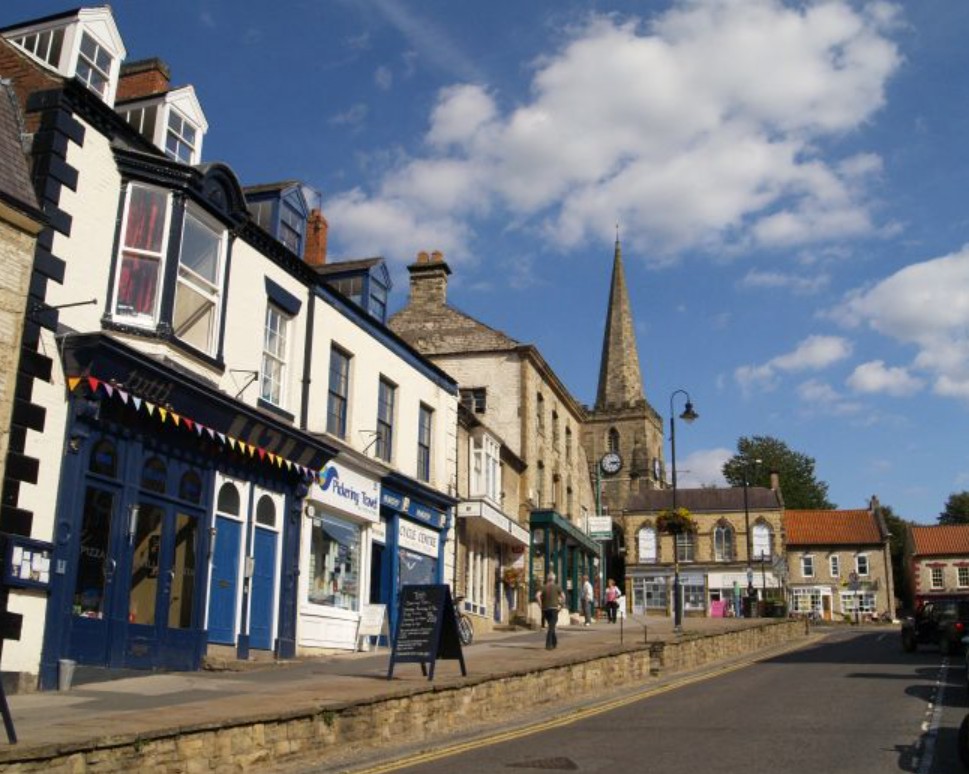
Pickering Market Place, with the parish church above the shopfronts.
Explore Pickering: the full guide
Five companion guides go deeper into the town: things to do in Pickering (the castle, the wall paintings, the railway, family days out and the Wartime Weekend), the Pickering Castle visitor guide (its history, what to see and planning a visit), the history and heritage of Pickering (the medieval wall paintings, Beck Isle Museum and the coming of the railway), places to eat in Pickering (restaurants, tea rooms and pubs) and shops and shopping in Pickering (the Monday market, independents and food shopping).
A market town with a lot packed in
Pickering is a thriving market town of independent shops rather than a museum piece, over a hundred independent stores, a lively Monday market in the Market Place, tea rooms and cafés with a pleasantly old-fashioned flavour, and Pickering Beck running through with its ducks. It has been a market town for centuries and wears its history lightly.
Pickering Castle
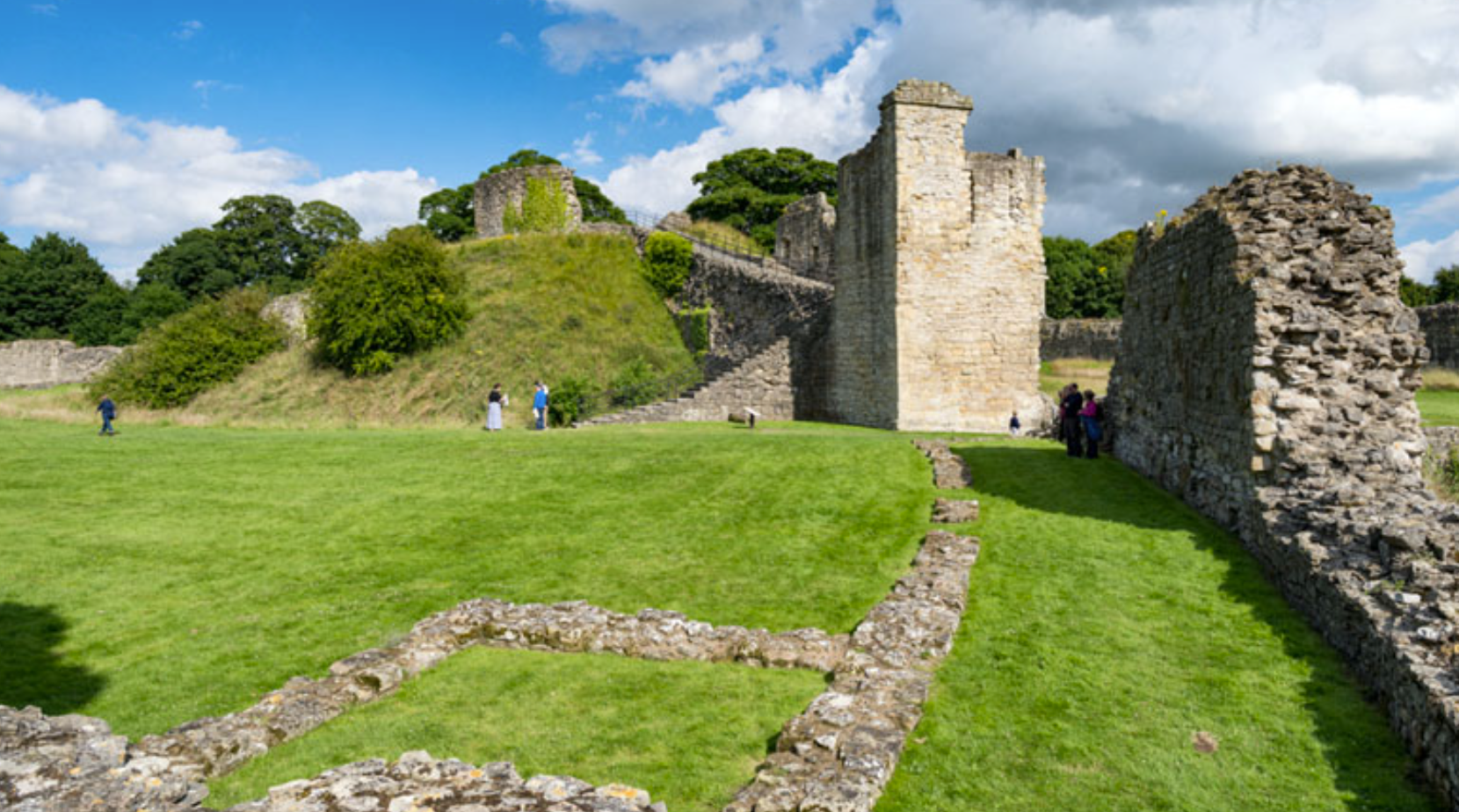
A well-preserved Norman motte-and-bailey castle sits on a rise just north of the town, first raised in timber around 1066 on William the Conqueror's orders and rebuilt in stone in the 13th century, later strengthened under Henry III and Edward II. It served as a royal hunting lodge, and no fewer than six English kings are said to have stayed here. You can walk the curtain walls, keep, chapel and gatehouse, with fine views over the town and the Vale. It's in the care of English Heritage, check opening times and admission on their website.
The medieval wall paintings at St Peter & St Paul's
The parish church, crowning the town above the Market Place, holds one of the most complete sets of late-medieval wall paintings in England, vivid cycles of saints and Bible scenes painted around the 1450s–1470s, including St George and the Dragon, a giant St Christopher, the Passion of Christ and the Seven Corporal Works of Mercy. They were whitewashed over at the Reformation, forgotten, rediscovered in 1852 and carefully revealed again in the 1870s. Standing beneath them gives an unusually direct sense of how colourful a medieval church interior really was. Grade I listed, usually open daily, and a genuinely special free thing to see.
The North Yorkshire Moors Railway
Pickering is the southern terminus of the North Yorkshire Moors Railway, one of the best-loved heritage steam lines in the country, 18 miles of restored line up through Newtondale to Grosmont, with many services running on to Whitby. Trains call at Levisham, Goathland (Hogsmeade in the first Harry Potter film, and Aidensfield in Heartbeat) and Grosmont. Pickering's own station is a lovingly restored period piece with a re-instated overall roof, a tea room and a shop; you can wander the platform and watch the steam trains come and go without a ticket. It runs mainly spring to autumn plus special services like the Santa Specials, check the timetable on the railway's site before you go.
Beck Isle Museum
By the beck in the centre of town, Beck Isle Museum, a volunteer-run museum of rural life, fills a Grade II listed Georgian mansion and its outbuildings with recreated period shops, a barber, chemist, cobbler, blacksmith and printer among them, plus a notable collection of early local photography. A gentle, hands-on way to understand the town's past, and good for families. Check current opening on the museum's own website.
Mathewsons, the classic-car auctioneers of TV's Bangers & Cash, now hold their auctions at a site on the edge of Pickering (the shop and museum remain in nearby Thornton-le-Dale).
Cycling from Pickering
Pickering sits a few minutes from Dalby Forest, and the town has an independent bike shop,Big Bear Bikes, at The Co-Op Building, 2 Southgate on the A170. It describes itself as being on Dalby Forest's doorstep, carries over 150 bikes, hires mountain and road bikes and runs a workshop staffed by Cytech-qualified mechanics, with guided rides, bike fitting and suspension servicing also offered. Check opening times and hire rates directly with the shop. More on the riding itself in our cycling guide.
Using Pickering as a base
Pickering sits within easy reach of the best of this side of the Moors: the Hole of Horcum eight miles up the A169, Dalby Forest, the postcard village of Goathland, Thornton-le-Dale, Rosedale and Hutton-le-Hole, and the coast at Whitby, Scarborough and Robin Hood's Bay, most within a 15–40 minute drive. See all the villages and places, and our plan your visit guide for the practicalities.
Getting here and parking
Pickering is on the A170 between Thirsk and Scarborough, about half an hour from the A64 at Malton. There are town-centre pay-and-display car parks a short walk from the Market Place. By bus, the scenic Coastliner (840) links York, Malton, Pickering and Whitby; by steam, you can arrive on the railway from Grosmont and Whitby.
Where to stay
As a base with this much on the doorstep, Pickering is a natural place to stay, see where to stay in the North York Moors for the villages and kinds of accommodation that suit exploring this corner of the park. If you are weighing it against the coast, see Whitby or Pickering, and against the other end of the park, Helmsley or Pickering.
Pickering FAQs
Why is Pickering called the gateway to the North York Moors?
Pickering sits on the A170 on the southern edge of the National Park, where the Vale of Pickering meets the moorland scarp. Roads north over the moor to Whitby, east to Dalby Forest and the coast, and west to Helmsley all start here, and it is the southern terminus of the North Yorkshire Moors Railway, so most first visits to the moors pass through it.
What is there to do in Pickering?
Pickering Castle, the medieval wall paintings in the church of St Peter and St Paul, the North Yorkshire Moors Railway, Beck Isle Museum, the Monday market and more than a hundred independent shops. Enough for a full day without leaving the town.
Is Pickering Castle worth visiting?
Yes, especially with children. It is a well-preserved Norman motte-and-bailey castle first raised in timber around 1066 and rebuilt in stone in the 13th century, used as a royal hunting lodge. It is cared for by English Heritage, check current admission and opening times on their website before you travel.
What are the Pickering church wall paintings?
The Church of St Peter and St Paul holds one of the most complete sets of late-medieval wall paintings in England, painted around the 1450s to 1470s. Whitewashed at the Reformation, rediscovered in 1852 and revealed again in the 1870s, they include St George and the Dragon, a giant St Christopher and the Seven Corporal Works of Mercy. The church is usually open daily and free to visit.
Is Pickering a good base for the North York Moors?
It is one of the best on the southern side. The Hole of Horcum is eight miles up the A169, Dalby Forest, Goathland, Thornton-le-Dale, Rosedale and Hutton-le-Hole are close by, and Whitby, Scarborough and Robin Hood's Bay are mostly a 15 to 40 minute drive.
Is Pickering worth visiting?
Yes, a handsome market town that's the southern gateway to the moors, best known as the terminus of the North Yorkshire Moors Railway, with a Norman castle, the Beck Isle Museum and a weekly market. It makes an excellent base for the southern moors and Dalby Forest.
Why is Pickering famous for its steam railway?
Pickering is the southern terminus of the North Yorkshire Moors Railway, one of the world's great heritage lines, whose steam trains run through Newtondale and Goathland to Grosmont and on to Whitby. Check the railway's official timetable before travelling.
How long do you need in Pickering?
Half a day covers the castle, museum and town; make it a full day if you're riding the steam railway or combining it with Dalby Forest or the coast.
Where do you park in Pickering?
There are car parks in the town centre near the railway station and off the main street; check local signage for current charges.
What's near Pickering?
Thornton-le-Dale, Dalby Forest, the Hole of Horcum, and Levisham and Goathland on the railway, plus family attractions like Flamingo Land and Eden Camp nearby.