Things to Do
Fossil hunting on the Dinosaur Coast
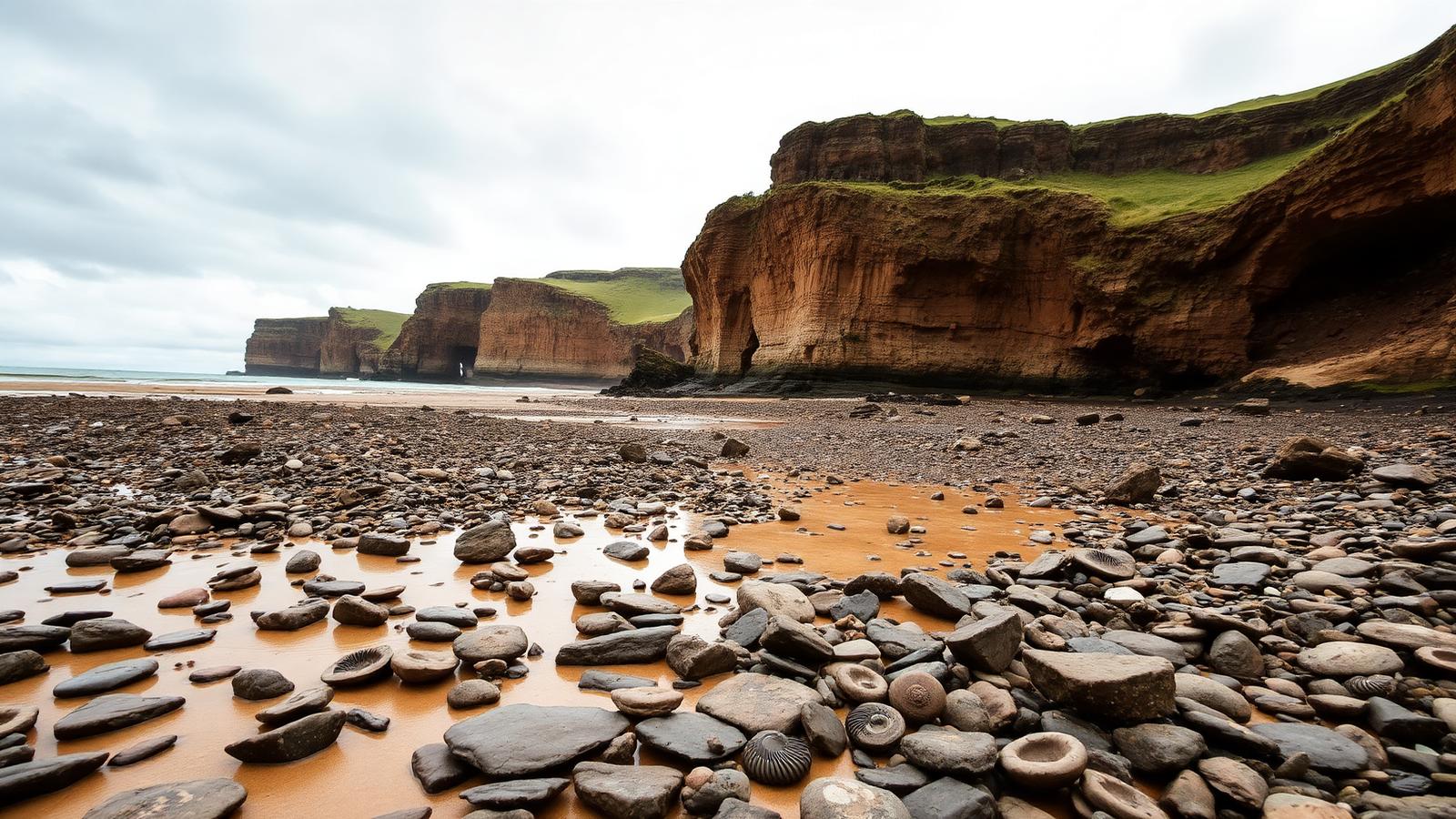
The Yorkshire coast, from the Tees to Flamborough, is one of Britain's richest fossil grounds, so rich it is nicknamed the Dinosaur Coast. Its Jurassic cliffs and beaches give up ammonites, belemnites and marine-reptile remains around 180 million years old, and it makes a brilliant, free family day out, as long as you go about it safely.
What you can find
- Ammonites, the coiled ‘snakestones’ of Whitby legend, the classic find.
- Belemnites (bullet-shaped) and Devil's toenails (Gryphaea, a fossil oyster).
- Marine-reptile remains, ichthyosaurs and plesiosaurs turn up; a near-complete crocodile-like Steneosaurus was found at Runswick Bay in 1824 and is now in Whitby Museum.
- Fossil plants and iron pyrite (‘fool's gold’).
- Whitby jet, the black gemstone, fossilised monkey-puzzle wood around 180 million years old, made famous by Victorian mourning jewellery.
Where to go
- Runswick Bay , sandy and rocky with rockpools, diverse ammonites; a lovely family-friendly spot.
- Robin Hood's Bay , ammonites, Devil's toenails and pyritised shells on a scenic, family-friendly shore.
- Staithes , ammonites common on the foreshore; the northern end of the Dinosaur Coast; a steep but manageable walk into the village.
- Saltwick Bay, just south of Whitby past the Abbey; ammonites in nodules, plus jet; steep steps down and crumbly cliffs, so take care.
- Boggle Hole and Sandsend, quieter hotspots.
For experienced hunters only: Port Mulgrave and Kettleness are highly productive (reptile remains) but have steep, difficult and sometimes dangerous access, not suitable for children.
Hunt safely and responsibly
The Dinosaur Coast is beautiful and, in places, genuinely hazardous. Follow the code:
- Check tide times and set out at least an hour before low tide, never risk being cut off by an incoming tide.
- Stay well away from the base of the cliffs; they are crumbly and rockfalls happen. The best finds are loose on the foreshore, not in the cliff.
- Wear sturdy footwear; beaches are slippery and uneven.
- Collect responsibly: take only loose fossils from the beach, do not hammer into the cliffs (parts are protected as SSSIs), and follow the National Park's fossil-hunting guidelines.
- Fresh material appears after storms and rough seas, the best time to look.
For families or first-timers, a guided fossil hunt (several local operators run them along this coast) is a safe, rewarding way to start.
Make a day of it
Combine a fossil hunt with the beach, a clifftop walk on the Cleveland Way, and fish and chips in Whitby, see the coast, and where to stay to base yourself near the shore.
Frequently asked questions
- Where is the best place to find fossils on the Yorkshire coast?
- Runswick Bay, Robin Hood's Bay, Staithes and Saltwick Bay near Whitby are the most accessible and productive spots for ammonites; Port Mulgrave and Kettleness are richer still but have difficult, hazardous access unsuitable for children.
- What fossils can you find on the North York Moors coast?
- Mostly Jurassic ammonites and belemnites, along with Devil's toenails, fossil shells and plants, and occasionally marine-reptile remains. Plus Whitby jet, the black gemstone.
- Is fossil hunting safe for children?
- At family-friendly beaches like Runswick Bay, Robin Hood's Bay and Staithes, yes, with supervision. Check tides, keep away from the cliffs, and avoid the difficult-access coves like Port Mulgrave and Kettleness.
- Do I need to check the tides?
- Yes, always. Set out at least an hour before low tide and never let an incoming tide cut you off; also keep clear of the crumbly cliff bases.
Stay near the shore
Base yourself on the southern edge of the moors and the Dinosaur Coast beaches are an easy morning's drive away.
Browse places to stay