Villages & Places
Scarborough
By Jon Cosson · Updated 17 October 2026
Britain's original seaside resort, and still the biggest town on this coast: two great bays either side of a castle headland, a harbour full of boats, a Victorian spa, an oriental park with a miniature naval battle, and a clifftop theatre that fills with tens of thousands each summer. Scarborough is the Queen of the Yorkshire Coast, and the natural southern bookend to a moors trip.
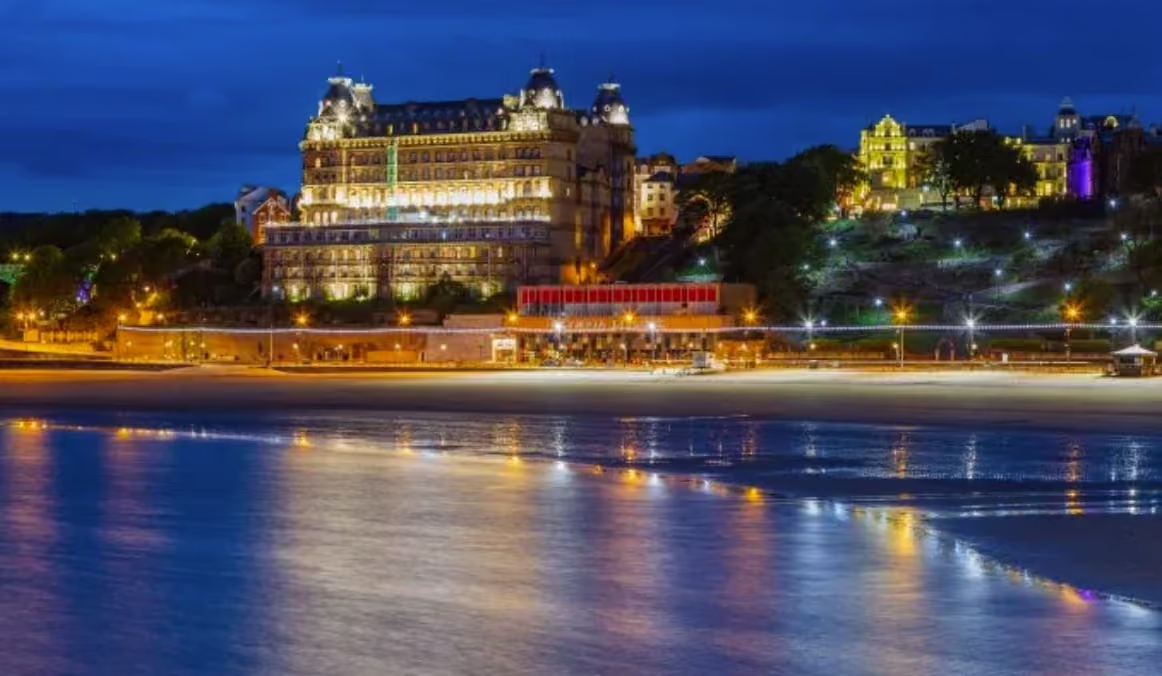
South Bay and the Grand Hotel after dark, Scarborough.
Where Scarborough is, and what it is like
Scarborough sits on the North Yorkshire coast about 17 miles east of Pickering along the A170, and roughly 20 miles south of Whitby. It is a town of around 61,000 people. A real place with a hospital, a college and a working harbour, not a seasonal shell. It lies just outside the National Park boundary, which makes it the coast's big town rather than a moorland village.
The geography is the whole story. A headland crowned by a castle divides the town in two. South Bay is the traditional, bustling side: harbour, arcades, donkey rides, ice cream, the old town climbing the hill and the Spa along the front. North Bay is quieter and more natural, a long open beach, surfers, rock pools, parks and gardens. Choosing which bay you are in charge of for the day is the first decision every visitor makes.
A bit of history
The headland has been occupied for something like 3,000 years, Bronze Age settlement, a Roman signal station, then a medieval royal fortress. The stone castle you see is largely of the 1150s, Henry II's great keep at its heart, and it endured a bitter Civil War siege in 1645.
The resort came later and by accident. In the early 1600s a mineral spring was found on the shore, the discovery is traditionally credited to a Mrs Farrer, and Scarborough became a spa town, drawing visitors to drink and bathe long before the seaside holiday existed. When sea bathing became fashionable the town was already ready for it, and the Victorians built the grand hotels, the cliff lifts and the gardens that still define it.
Explore Scarborough: the full guide
This page is the overview, where the town is, its history, beds, getting here and events. The detail lives in three companion guides:
- Things to do in Scarborough, the two bays, Scarborough Castle, Peasholm Park, the Spa, the Open Air Theatre, the museums, the Fair Collection, beaches and walks.
- Where to eat in Scarborough, the fish and chip shops, harbour seafood, restaurants, tea rooms and old-town pubs.
- Shops and shopping in Scarborough, the Victorian Market Hall and its underground Vaults, vintage and antiques, bookshops and the high street.
What to see
The set pieces are Scarborough Castle on the headland between the bays, Peasholm Park with its dragon pedaloes and miniature Naval Warfare display, the Victorian Spa on South Bay and the clifftop Open Air Theatre. Add the Rotunda Museum, the Stephen Joseph Theatre and Anne Brontë's grave at St Mary's Church.
Two Blue Flag beaches, the flat Marine Drive walk round the headland, the South Cliff Italian Gardens and The Scarborough Fair Collection's vintage vehicles are all covered in our things to do in Scarborough guide.
Eating, drinking and shopping
Fish and chips on the harbourside, crab and whelks from the harbour stalls and a proper Yorkshire tea are the traditional order of the day, with the old-town streets behind South Bay holding most of the independent cafés, restaurants and pubs. Our where to eat in Scarborough guide names them.
For shopping, the restored Victorian Market Hall on St Helen's Square and the vintage traders in the Vaults beneath it are the highlight, with antiques and independents around St Nicholas Street, see shops and shopping in Scarborough. Inland alternatives are in our food and drink section.
Where to stay
Scarborough has the widest choice of beds on this coast, seafront hotels, guest houses on the North and South Cliffs, self-catering flats, holiday parks and campsites on the edges of town. We list no individual businesses we have not verified: book through the town's official visitor information, the established booking channels, or direct with the property.
If you want moors as well as sea, base yourself inland instead, around Thornton-le-Dale or Allerston, and drive over in about 40 minutes. See our where to stay guide and the best base villages comparison.
Getting here
By car: the A64 from York and Malton, or the A170 over from Pickering and Thornton-le-Dale. Town-centre and seafront pay-and-display parking fills fast in summer; arrive early or use the edge-of-town options.
By bus: the 843 Coastliner runs from Leeds and York to Scarborough, its sister 840 takes the moor route to Whitby, and the East Yorkshire 28 (numbered 128 until February 2026) links Scarborough with Pickering and Helmsley along the A170. Both are scenic in their own right. Check current timetables.
By train: Scarborough station is in the centre of town, with services from York, Leeds and Hull. Combining rail here with the steam railway from Pickering makes a satisfying car-free week.
Events
Summer concerts at the Open Air Theatre, the Spa's jazz festival and orchestra season, the Naval Warfare displays at Peasholm Park, seafront and harbour events through the school holidays, and Christmas lights on the front. Dates change every year, check our what's on calendar and the official listings before booking around anything.
Accessibility and a gentle visit
Scarborough is one of the easier coastal towns to enjoy at a slow pace. Marine Drive is flat and fully surfaced the whole way round the headland; the open-top bus and the funicular cliff lifts spare the steep bits between front and clifftop; and there is blue-badge parking near both bays and at the main attractions. Peasholm Park, the Spa forecourt and the North Bay promenade are level.
The hard parts are the castle headland (a real climb, uneven ground at the top) and the old-town lanes above the harbour, which are steep and cobbled. A relaxed day might be: park on North Bay, the miniature railway to Scalby Mills, lunch, then the open-top bus round to South Bay and back along Marine Drive.
Nearby
Whitby is 20 miles north along the coast road; Robin Hood's Bay lies between them. Pickering and Thornton-le-Dale are half an hour west on the A170, with Dalby Forest in between. Inland, Sutton Bank and Helmsley make the far end of a moors day. See our itinerary for how to link the coast and the heather in one trip.
Scarborough FAQs
What is the difference between Scarborough's two bays?
South Bay is the traditional resort: harbour, arcades, donkey rides, ice cream, the old town and the Spa, with the castle headland above. North Bay is quieter and more natural, a long beach good for surfing and rock pools, Peasholm Park, the Open Air Theatre, SEA LIFE and the North Bay Railway. Marine Drive links the two around the headland in about 30 flat minutes on foot.
Is Scarborough Castle worth visiting?
Yes, as much for the position as the ruins. It stands on the headland between the two bays, on ground occupied for around 3,000 years, and the visible ruins date mainly from the 1150s, including Henry II's great stone keep. It was besieged during the Civil War in 1645. English Heritage run the site; check current admission and opening times before you travel.
Why is Scarborough called Britain's first seaside resort?
Because it was. A mineral spring found on the shore in the early 1600s, traditionally credited to a Mrs Farrer, made the town a spa destination long before sea bathing became fashionable, and visitors have been coming to take the waters and the air ever since. The Scarborough Spa on South Bay is now a Victorian concert and entertainment venue, home to the Spa Orchestra.
What is the Naval Warfare display at Peasholm Park?
A miniature naval battle staged on the boating lake at Peasholm Park, with model warships and pyrotechnics. A Scarborough tradition running since 1927. The park itself is oriental-themed, Green Flag-awarded, and has dragon pedaloes on the lake. Check the current season's display dates locally before planning around it.
Where is Anne Bronte buried?
In the churchyard of St Mary's Church, below Scarborough Castle. Anne Bronte came to Scarborough for her health and died here in 1849; she had used the town in her novel Agnes Grey. The church itself dates from around 1150, and the grave is signposted from the path.
Is Scarborough worth visiting?
Yes, Britain's original seaside resort has two sweeping bays, a headland castle, spa heritage, Peasholm Park and traditional seaside fun, making it the liveliest town on the Yorkshire coast.
What is there to do in Scarborough?
Explore Scarborough Castle, relax on the South or North Bay beaches, visit Peasholm Park, the SEA LIFE sanctuary, the Rotunda Museum and the Open Air Theatre, and enjoy the harbour, funfair and traditional seafront.
Is Scarborough good for families?
Very, sandy beaches, Peasholm Park with its boating lake and naval battle re-enactments, the North Bay Railway, SEA LIFE and classic seaside amusements all suit children.
Why is Scarborough historically important?
It's regarded as Britain's first seaside resort, having grown from a 17th-century spa; the medieval castle crowns a headland occupied for around 3,000 years, and the town became a fashionable Victorian resort. The author Anne Brontë is buried at St Mary's Church.
How long do you need in Scarborough?
A day for the beaches, castle and seafront; a weekend to add the museums, theatres, Peasholm Park and the coastal walks.
Where do you park in Scarborough?
There are car parks around both bays and the town centre; check local signage for current charges, and expect it to be busy in summer.
Coast and moors in one trip
Scarborough is around 40 minutes from the southern edge of the National Park, so a cottage around Thornton-le-Dale or Allerston puts both the beaches and the heather within easy reach.
Browse places to stay