Classic Car Country
A Classic Car Weekend in the North York Moors
By Jon Cosson · Updated 17 October 2026
Three days, the greatest driving roads in the National Park, and the practical detail an older car actually needs. Fuel, parking, pubs and a gentle walk each day.
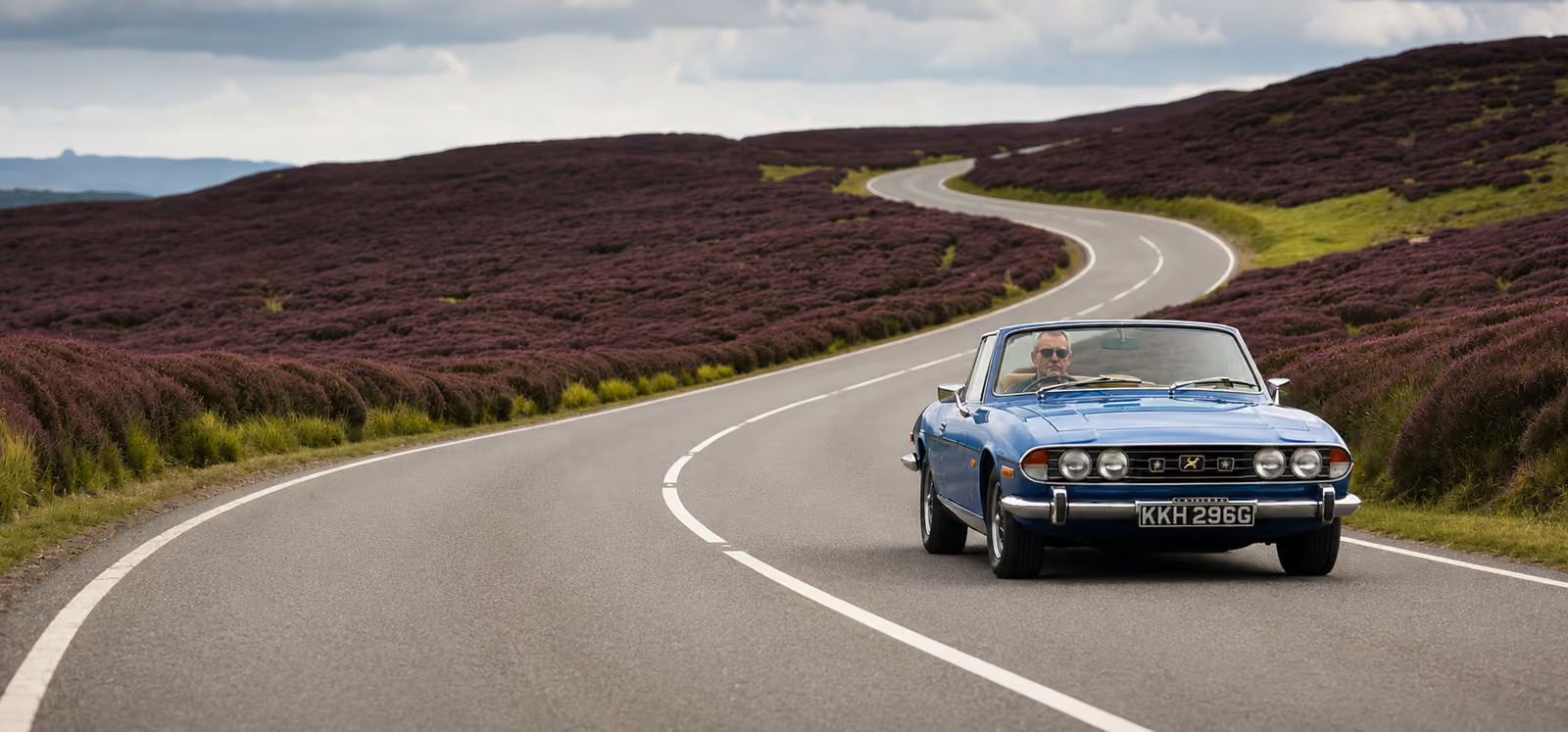
A weekend is enough to drive the best of the moors without hurrying.
The North York Moors is one of the finest touring grounds in England for an older car, and a weekend is enough to drive its greatest roads without hurrying. This three-day route strings the best of them together, the escarpment views of the west, the open heather of Blakey Ridge, and the moor-to-sea run to Whitby. With the practical detail an older car needs: where to fill up, where to leave the car, a good pub each day and a gentle walk to stretch your legs. Drive it in a classic, a modern car or a camper van; it rewards an unhurried pace whatever you are in.
Before you set off
- Base, a western or southern village (Helmsley, Pickering, Thornton-le-Dale or Kirkbymoorside) puts every day within about 40 minutes. See where to stay.
- Fuel, treat the moor tops as a fuel desert; fill up in the towns (Helmsley, Pickering, Kirkbymoorside, Thornton-le-Dale, Stokesley, Castleton, Whitby) before the high roads.
- Older cars, low gears on the long descents, watch the temperature gauge in summer traffic, expect free-roaming sheep and cattle grids. The full route detail is on our driving routes page.
The route, stop by stop
Pick a day, then a stop, to centre the map, and follow the link through to the full guide. Use the left and right arrow keys to change day, and the up and down arrow keys to move between stops. A full written list of every stop is below the map.
Map centred on stop 1 of 6: Helmsley , Base for the day, market square, castle and fuel before the moor roads.
- Roadside stop
- Roadside stop
- Roadside stop
Text alternative: every stop on the weekend
The same route in words, in order, for anyone who cannot use the map.
Day 1, The western moors and Sutton Bank
- Helmsley, Base for the day, market square, castle and fuel before the moor roads. Helmsley guide
- Rievaulx Abbey, Cistercian ruins in a wooded valley, with a short walk to the terrace viewpoint. Rievaulx Abbey guide
- Newgate Bank, First big view north over Bilsdale on the B1257, a natural photo stop.
- Chop Gate, Bilsdale, Lunch stop in the dale, halfway along the 'Yorkshire TT'.
- Clay Bank top, Cleveland Hills escarpment and Roseberry Topping on the skyline.
- Sutton Bank, National Park Centre, the escarpment edge view and the 1-in-4 descent. Sutton Bank guide
Day 2, Blakey Ridge, the roof of the moors
- Hutton-le-Hole, Sheep on the green and the Ryedale Folk Museum before the climb. Hutton-le-Hole guide
- Blakey Ridge & the Lion Inn, Open heather in every direction; one of the highest inns in England.
- Rosedale Abbey, Drop into the dale by the gentler road, not Chimney Bank in a marginal car. Rosedale Abbey guide
- Rosedale ironstone railway, Level walk along the old railway track with views back across the dale.
Day 3, Moor to sea on the A169
- Pickering, Fuel and a start on the A169, castle, market town and the steam railway. Pickering guide
- Hole of Horcum (Saltergate), Great moorland amphitheatre, with a moderate circular walk from the car park. Hole of Horcum walk
- Whitby, Park at the West Cliff or park & ride, abbey, 199 steps and the harbour. Whitby guide
- Goathland, Heartbeat's Aidensfield and Harry Potter's Hogsmeade station. Goathland guide
- Grosmont, Watch the steam locomotives being coaled and turned on the way home. Grosmont guide
Day 1
The western moors and the finest view in England
Rievaulx, the B1257 and the Sutton Bank escarpment
- Drive
- B1257 and Sutton Bank (A170)
- Fuel
- Helmsley or Stokesley
- Parking
- Sutton Bank National Park Centre (pay & display, café)
- Walk
- The Sutton Bank escarpment edge (easy, level) or Helmsley to Rievaulx
- Pub
- Helmsley
- Note
- Caravans are banned on Sutton Bank, and the 1-in-4 descent wants a low gear in an older car.
Day 2
The roof of the moors: Blakey Ridge
Hutton-le-Hole, open heather and the Lion Inn
- Drive
- Hutton-le-Hole to Blakey Ridge to Rosedale
- Fuel
- Kirkbymoorside or Castleton (none on the ridge)
- Parking
- Hutton-le-Hole village car park, the Lion Inn (patrons), Rosedale Abbey
- Walk
- The old Rosedale railway track (level)
- Pub
- The Lion Inn
- Note
- High and exposed, mist can drop in minutes; Rosedale Chimney Bank is roughly 1-in-3 with a hairpin and best avoided in a heavily-laden or marginal car.
Day 3
Moor to sea: the A169 and Whitby
The Hole of Horcum, the harbour and the Esk Valley home
- Drive
- A169 Pickering to Whitby, returning via the Esk Valley
- Fuel
- Pickering or Whitby
- Parking
- Hole of Horcum (Saltergate), Whitby West Cliff or park & ride
- Walk
- The Hole of Horcum circular (moderate) or the abbey and 199 steps
- Food
- The Fox & Rabbit; Whitby fish and chips
- Note
- The A169 is a fast road with blind crests and cars slowing for the Horcum viewpoint; the long descent into Whitby is hard on older brakes.
A weekend for every season
Spring (March to May)
Wild daffodils along Farndale, lambs on the moor roads (leads on near stock), and clear, quiet driving before the summer crowds; cooler air suits older engines.
Summer (June to August)
The heather builds to its late-August purple and the coast holds long light evenings, but the coast roads and Whitby are busy at weekends and long climbs in queuing traffic are where older cooling systems feel the strain. Drive early and midweek where you can.
Autumn (September to November)
The connoisseur's season, golden colour in Dalby, Newtondale and the Esk Valley, the last of the heather, empty roads and soft light; arguably the best time to tour the moors in an open car.
Winter (December to February)
Crisp, clear days with enormous visibility, some of the darkest skies in England for an after-dinner hour, and cosy pubs at the end of the run, set against short days, real cold and ice that lingers on the high roads. Keep to the main roads, avoid the severe banks and check the forecast.
- The spring classic car weekend, Farndale daffodils, quiet roads and lambing-season care.
- The summer classic car weekend, the late-August heather, long coastal evenings and beating the traffic.
- The autumn classic car weekend, golden woodland, empty roads and soft light.
- The winter classic car weekend, crisp visibility, dark skies and which roads to avoid.
Touring it in your own classic
The moors suit different cars in different ways, and our sister archives cover the details: an MG T-Type loves the flowing B1257 and the dale lanes (MG T-Series Archive); a Triumph Stag makes an effortless grand-touring weekend of it (Triumph Stag Archive); an AC Aceca-Bristol is in its element on the open A-roads and the coast run (AC Aceca Archive). Our own touring journal contains classic-car touring posts, and the full route detail is on the classic car driving routes page.
Classic car weekend FAQs
How many days do you need for a classic-car weekend in the North York Moors?
Two days covers the headline roads (the B1257 and Sutton Bank, then Blakey Ridge and the coast); three lets you add the A169 moor-to-sea run and Whitby without rushing.
What's the best base for touring the moors by car?
A western or southern village, Helmsley, Pickering, Thornton-le-Dale or Kirkbymoorside, puts every route within about 40 minutes.
Is the North York Moors suitable for a 1950s classic?
Yes, with sense: fill up before the moor tops, use low gears on the steep descents, watch the temperature in summer traffic, and avoid the severe banks (Rosedale Chimney, about 1-in-3) in a marginal car.
Where's the last fuel before Blakey Ridge?
Kirkbymoorside on the south side or Castleton on the north; there is no fuel on the ridge itself.
Where do you park a classic car in Whitby?
Use the West Cliff car parks or the park & ride and walk down; the old town's narrow lanes are no place for a classic.
Can you do this trip in a camper van or a modern car?
Absolutely; the routes and stops work for any vehicle that enjoys an unhurried pace. Only the very steep banks (Sutton Bank, Rosedale Chimney) need care with a heavy or long vehicle, and caravans are banned on Sutton Bank.
The village and classic-car sister sites linked here are also written by the author of this guide.
A base for the weekend
A western or southern village base, Helmsley, Pickering, Thornton-le-Dale or Kirkbymoorside, puts all three days within about 40 minutes of the door.
Browse places to stay