Plan Your Visit
The best time to visit the North York Moors
There is no wrong time to visit the moors, only different ones. The heather turns the hills purple in late summer, daffodils line the dales in spring, the forests blaze in autumn, and winter brings some of England's darkest, starriest skies. Here is what each season offers, so you can time your trip to what you most want to see.
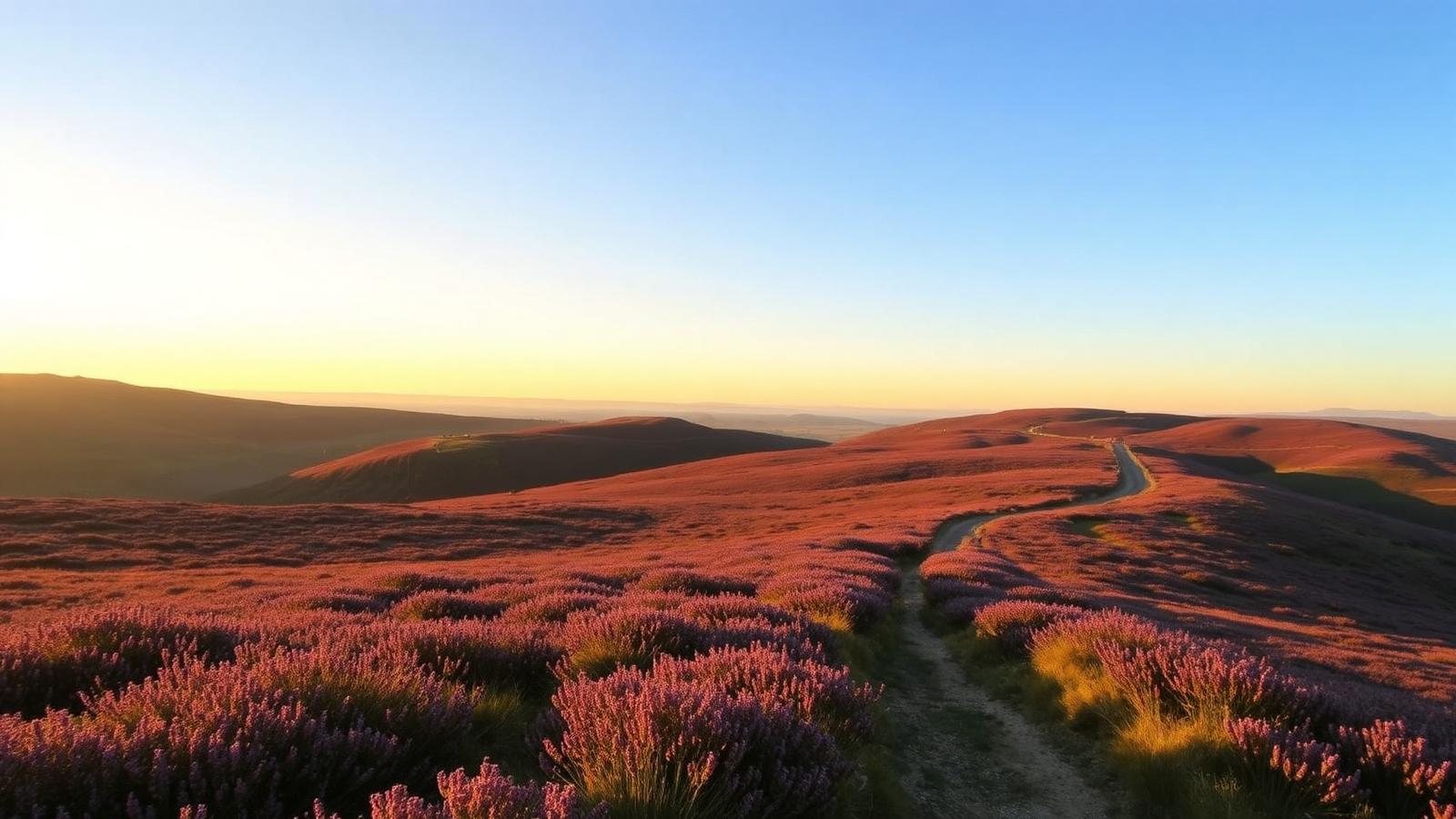
Late summer: the heather bloom (mid-August to September)
The moors' signature spectacle. From mid-to-late August into September, the moorland, around a third of the National Park, the most extensive heather display in England, turns to a sea of purple and pink, alive with bees and the scent of heather. The Hole of Horcum, Fylingdales Moor and the high-moor roads (the A169, Blakey Ridge) are among the best places to see it; come early or late for the finest light, and pack midge repellent for still, warm evenings.
Spring: daffodils and new life (March to May)
Spring brings the famous wild daffodils of Farndale, lining the River Dove from about mid-March to mid-April along an easy, mostly-paved walk from Low Mill. One of the loveliest spring walks in the North. See our Farndale daffodil walk guide for the route, parking and how to check whether they are out. Lambs dot the fields, migrant birds return and the weather softens for walking.
Autumn: colour and quiet (September to November)
As the heather fades, the woodlands take over, Dalby Forest, Sutton Bank and the dales glow gold and auburn before the leaves fall. Fewer visitors, misty mornings and cosy pub fires make autumn a favourite for walkers and photographers.
Winter: dark skies and solitude (December to February)
Winter is quiet, crisp and often magical. With very little light pollution, the National Park is a designated International Dark Sky Reserve, and clear winter nights bring extraordinary stargazing, celebrated each February at the North York Moors Dark Skies Festival, one of the highlights of our events calendar. For Christmas visits, our guide to the moors at Christmas covers the Santa Express dates and prices and the season's events. Wrap up, watch the weather on the tops, and enjoy having the place almost to yourself.
Quick guide
| What to see | When |
|---|---|
| Purple heather | Mid-August to early September |
| Daffodils (Farndale) | Mid-March to mid-April |
| Autumn colour | October to early November |
| Dark skies & stargazing | Clear nights, October to February |
Whenever you choose to come, book early for the heather weeks and school holidays, see where to stay.
Frequently asked questions
- When does the heather bloom in the North York Moors?
- From mid-to-late August into September, peaking around late August. The Hole of Horcum and Fylingdales Moor are among the best places to see the purple display.
- When is the best time to see the Farndale daffodils?
- The wild daffodils along the River Dove in Farndale are usually at their best from mid-March to mid-April.
- What is the best time of year to visit the North York Moors?
- Late August for the heather, spring for daffodils and lambs, autumn for forest colour, and winter for dark-sky stargazing. Each season has its own highlight.
- Are the North York Moors good for stargazing?
- Yes, the National Park is an International Dark Sky Reserve with very low light pollution; clear autumn and winter nights are best, and the Dark Skies Festival runs each February.
Time your trip, then find a base
Whether you come for the heather, the daffodils or the dark skies, a cottage on the southern edge of the moors puts all of it within reach.
Browse places to stay