Wildlife
Wildlife of the North York Moors: What to See, Where and When
By Jon Cosson · Updated 19 October 2026
The North York Moors is one of the richest wildlife landscapes in England, heather moorland protected for its birds, forests holding some of the country's rarest raptors, a river with a creature found in only seven in England, and a coast where whales pass within sight of the cliffs. This is a guide to what you might see, where to look and when to go. Written for people touring the moors, so the wildlife sits alongside the drives, walks and villages rather than apart from them.
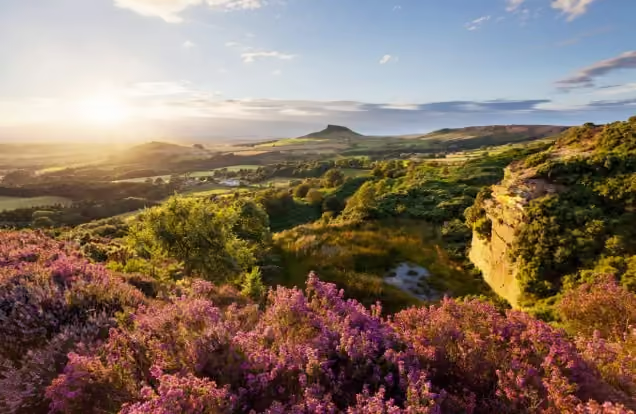
The moorland: protected for its birds
The high heather moorland, one of the largest expanses in England and Wales, is a designated Special Protection Area chosen for two breeding birds: the merlin, Britain's smallest bird of prey, and the golden plover. With them come red grouse, curlew, lapwing, skylark, snipe, short-eared owl and the moor-edge ring ouzel; the moor is internationally known as a haven for ground-nesting birds. They breed spring to summer, and because they nest on the ground, keep dogs on leads from March to July.
The forests: goshawk, honey buzzard and nightjar
Woodland covers nearly a quarter of the park, and the forests of Dalby and Wykeham hold nationally important nightjar and two of Britain's most elusive raptors, goshawk and honey buzzard, plus the only breeding turtle dove population in the north of England. The Wykeham Forest Raptor Viewpoint is a permanent, signposted spot, goshawk best in late winter when they display, honey buzzard in summer; bring binoculars, patience and clear skies. Nightjars churr at dusk in June and July in the clearings.
The rivers: salmon, crayfish and the pearl mussel
The River Esk is the only river in Yorkshire, and one of only seven in England, to hold the freshwater pearl mussel; it also has Atlantic salmon and white-clawed crayfish, with dipper, grey wagtail and kingfisher on the becks. Forge Valley's feeding station is one of the easiest places to watch woodland birds close up.
The mussel depends on fish: its larvae spend several months on the gills of Atlantic salmon and trout before dropping into the gravel of the riverbed. The National Park puts its decline down to habitat loss, water pollution and fewer host fish. In 2021 adult mussels from the Esk, some more than 80 years old, were moved into a captive breeding programme run by the Freshwater Biological Association, which has specialist facilities at Windermere. The River Esk and Coastal Streams Partnership, working with Natural England and the Environment Agency, is now scoping sites where young mussels of seven years and older could be released back into the catchment in the coming years. The National Park's breeding project page has the detail.
Visitors can help. In December 2023 the Environment Agency confirmed an established population of invasive American signal crayfish in the Esk, a threat to the mussels, and the National Park's partnership also works to control Japanese knotweed and Himalayan balsam. After a day by the river, on foot or by bike, check your boots, clothing, bike and any other kit for mud, plants and animals, clean everything thoroughly, and let it dry before you use it anywhere else. Never move crayfish from the river. The National Park's invasive species page explains the check, clean and dry approach.
The coast: seals and whales
Read Whitby boat trips and whale watching for operators and when to go.
Along the 26 miles of coast, minke whales and white-beaked dolphins follow the fish south from June into autumn, boat trips run from Staithes and Whitby. Grey and common seals haul out below the cliffs (best seen at Ravenscar): watch from above, never approach, and keep dogs well back. Grey seals pup in November, common seals in summer.
Butterflies and rarities
The moors hold Britain's most northerly colony of the Duke of Burgundy butterfly, fritillaries and Large Heath at Fen Bog, and the dwarf cornel at its southern limit in Britain, genuine range-edge specialities.
Where to watch
- Wykeham Forest Raptor Viewpoint, goshawk and honey buzzard over Troutsdale.
Best season to watch: late winter for displaying goshawk, summer for honey buzzard. - Forge Valley, woodland feeders and easy going on the boardwalk.
Best season to watch: year-round, the feeding station works in every season. - Fen Bog, bog wildlife beside the steam line in Newtondale.
Best season to watch: late spring into summer for dragonflies and butterflies. - Scaling Dam, a bird hide for wildfowl and waders.
Best season to watch: autumn and winter, when numbers are highest. - Ravenscar, seals below the cliffs, and boat trips for whales from the coast.
Best season to watch: seals year-round; grey seals pup in November, common seals in summer.
Seasons shape everything here, see the best time to visit the moors for weather, crowds and what the landscape is doing month by month. Several of these spots are in our Plan My Day finder, so you can build a day around a wildlife spot, a walk and a pub.
Wildlife through the year
Spring: moorland waders return to breed (leads on). Summer: nightjar at dusk, honey buzzard over Wykeham, seal pups, the first whales. Autumn: whales and dolphins peak, grey seals pup, the deer rut. Winter: goshawk display over Wykeham, short-eared owls, wildfowl at Scaling Dam. See also the best time to visit.
Watching responsibly
Never approach nesting birds or seal colonies; keep dogs on leads for ground-nesters (March to July) and away from seals; take binoculars and don't count on a sighting, weather and season decide it; follow the Countryside Code; and take great care with fire risk on dry moorland.
Wildlife FAQs
What wildlife can you see in the North York Moors?
On the moor: merlin, golden plover, red grouse and curlew; in the forests: goshawk, honey buzzard and nightjar; on the rivers: dipper and salmon; off the coast: seals, whales and dolphins.
Where is the best birdwatching in the North York Moors?
The Wykeham Forest Raptor Viewpoint for goshawk and honey buzzard, Forge Valley for woodland birds, Fen Bog and Scaling Dam for wetland species, and the coast for seabirds and sea mammals.
When can you see nightjars and goshawks?
Nightjars churr at dusk in June and July in the forest clearings of Dalby and Wykeham; goshawks display over Wykeham in late winter.
Can you see whales and seals off the North York Moors coast?
Yes, minke whales and dolphins pass from June into autumn (boat trips from Staithes and Whitby), and grey and common seals haul out below the cliffs; watch seals from a distance and keep dogs away.
Is the moor good for wildlife with a dog?
Yes, but keep dogs on leads on the open moor from March to July for ground-nesting birds, and well away from seal colonies on the coast.
Are there freshwater pearl mussels in the River Esk?
Yes. The Esk holds Yorkshire's last population of the endangered freshwater pearl mussel. Adults have been bred in captivity by the Freshwater Biological Association, and the river partnership hopes to trial releasing young mussels back into the catchment. Check, clean and dry your boots, clothing, bike and kit after time by the river to avoid spreading invasive species.
Where to stay in the North York Moors
Self-catering cottages, village inns and farmhouse boltholes right across the moors, from the southern villages to the coast.
Browse places to stay