Villages & Places
Runswick Bay
By Jon Cosson · Updated 19 October 2026
A sweep of firm sand under a hillside of red pantiles, sheltered from the worst of the north wind and open to dogs all year. Runswick is the beach day on this coast, and the village above it climbs the hillside in steep lanes and steps.
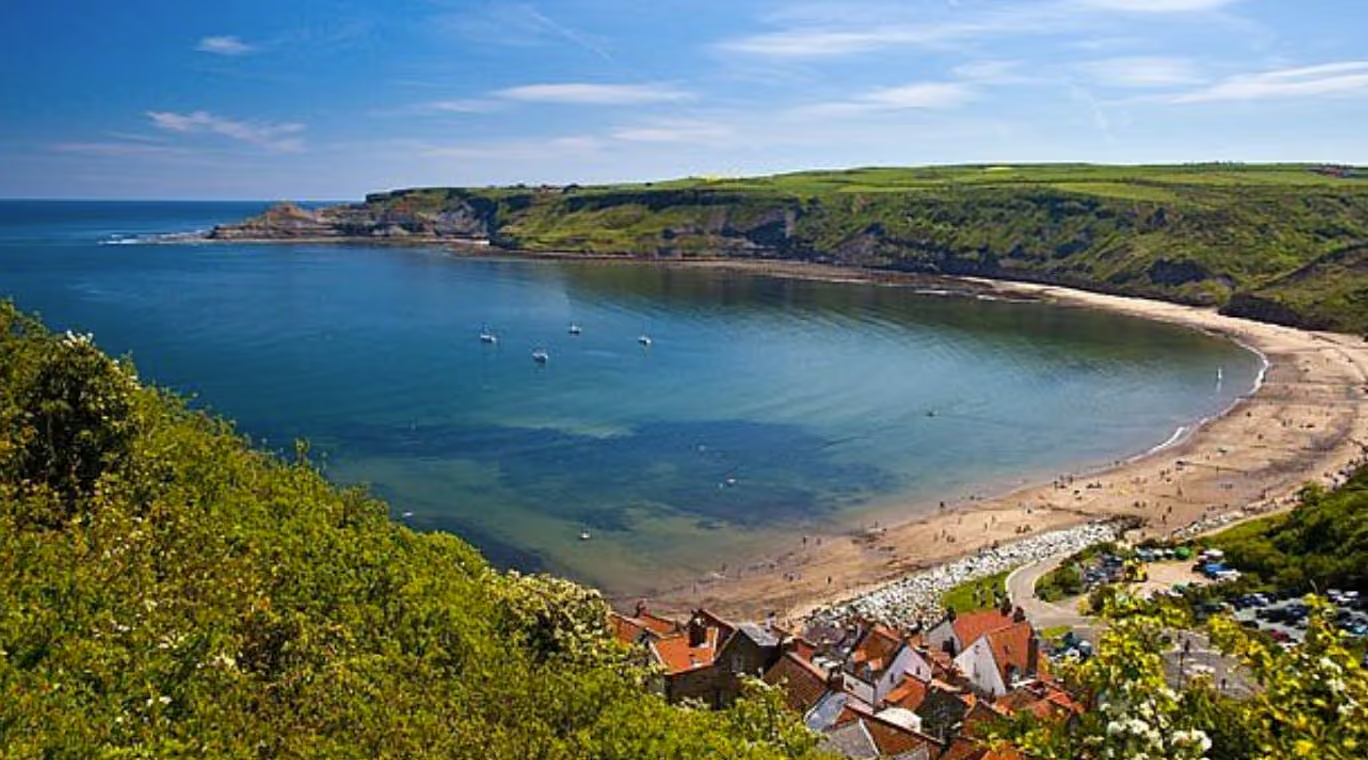
Runswick Bay from above, with the village roofs, sheltered water and long curve of sand in view.
Things to do in Runswick Bay
- The sandy beach and the rock pools uncovered at low tide.
- Fossil hunting on the foreshore.
- The Kettleness walk along the beach and headland.
- The cliff path north to Staithes.
- The village lanes and steps above the slipway.
Where it is, and getting there
Runswick Bay lies on the A174 eight miles north of Whitby and four south of Staithes, inside the North York Moors National Park. Coast buses stop at the top of the bank; there is no station, and the nearest railway is Whitby's Esk Valley line. Walkers arrive on the Cleveland Way, which drops off the cliffs at Kettleness and crosses the beach itself at low water.
Parking and the bank
There are two options and they behave quite differently. The top car park, on the approach road, always has space earlier in the day and leaves you a steep walk down the bank. The bottom car park by the slipway is small, fills by mid-morning in season, and sits close enough to the sea that it is occasionally closed or awash in storm conditions.
The bank between the two is a serious gradient, fine going down, a genuine effort coming back with beach kit and tired children. Factor it into the day rather than discovering it at five o'clock.
The beach
The Runswick Bay webcam link shows the beach and sea from the rescue boat station.
Before walking towards Kettleness, read the tide checks and RNLI cut-off advice.
Nearly a mile of sand runs from the slipway round to Kettleness, backed by cliffs and broken by rock ledges at either end. It is a rare thing on this coast: sheltered, sandy, and shallow enough to paddle in comfortably. At low tide the rock pools at the Kettleness end are good for crabs, blennies and anemones, a better rainy-hour-avoiding activity than any arcade, and one of the best beaches in the park for families.
There are no lifeguards. The sea can pull strongly around the ledges, sea fret rolls in fast, and the tide cuts off the Kettleness end. Check a Whitby tide table and walk the beach on a falling tide.
Dogs
Runswick is one of the best dog beaches in Yorkshire, with no seasonal ban to work around. Lead-work is sensible on the slipway and the village lanes; after that it is a mile of sand and a cliff path in either direction. The dog-friendly pub notes, including the Royal Hotel above the slipway and the beach cafe are used to sandy dogs.
The village, and the landslip
The cottages here are stacked in the same tumbled way as Staithes, with steps for streets and a thatched cottage among the pantiles. It is a young village by Yorkshire standards for an unhappy reason: the original settlement slipped into the sea in the 1680s, and the present one was rebuilt above the slide. A sea wall and drainage works keep the hillside in place today; the geology is still the story here, as the fossils on the beach make clear.
Walks from the bay
Kettleness round (about 4 miles). Along the beach at low tide, up onto the headland past the old alum and ironstone workings, and back on the Cleveland Way for the view down over the whole bay. Tide-dependent, take the cliff path both ways if in doubt.
Staithes cliff path (about 4 miles one way). North along the tops with the bus back, or make a day of it and return the same way. One of the finest coastal miles in the national park.
Sandsend and Whitby (about 7 miles one way). South past Kettleness, the old railway tunnels and the alum quarries to Sandsend, with the beach walk on to Whitby if the tide allows. More routes in our walks section.
Runswick Bay FAQs
- Where is Runswick Bay?
- Runswick Bay is on the North Yorkshire coast, about eight miles north of Whitby on the A174 and four miles south of Staithes, inside the North York Moors National Park.
- Where do you park at Runswick Bay?
- There is a pay-and-display car park at the top of the bank, and a smaller area down by the beach at the bottom that fills very early and can be cut off by weather. Most visitors park at the top and walk down the bank, a steep five to ten minutes down, and a proper pull back up.
- Is Runswick Bay a sandy beach?
- Yes, nearly a mile of firm golden sand curving round to Kettleness, with rock ledges and pools uncovered at low tide. It is the best family beach between Whitby and Saltburn and it shelves gently, though there is no lifeguard cover, so treat the sea with respect.
- Are dogs allowed on Runswick Bay beach?
- Yes, all year and with no seasonal restriction. One of the reasons dog owners rate this beach above the busier resort sands. Bring a towel and a lead for the slipway and village lanes, and pick up as you would anywhere.
- Can you find fossils at Runswick Bay?
- Yes. The bay cuts through Jurassic shales and ammonites, belemnites and fossil wood turn up loose on the foreshore, particularly after winter storms. Collect what the sea has already freed, keep away from the cliff base, and never dig or hammer the cliffs. They slip regularly here.
- How far is Runswick Bay from Whitby?
- About eight miles north, roughly 15 minutes by car on the A174, with coast buses stopping at the top of the bank. Staithes is four miles further north, and Sandsend is on the way back towards Whitby.
- Can you walk from Runswick Bay to Staithes?
- Yes, about 4 miles one way on the Cleveland Way cliff path. The X4 bus can bring you back; check the timetable before you set off.
- Is Runswick Bay in the North York Moors National Park?
- Yes. The village and bay lie inside the North York Moors National Park, on its coastal edge.
Published parking details
The council Bank Bottom car park, TS13 5HT, charges from 1 March to 31 October, 9am to 6pm: As Bank Top: 1hr £2.90, 2hrs £4.40, 4hrs £5.80, 6hrs £6.60, 24hrs £7.90 (1 March to 31 October). It is a separate destination from parking in the upper village.
Coastal bus
Arriva X4 connects Whitby and Middlesbrough and lists a stop at Runswick Bay Hotel in the upper village. Check the operator timetable for the date, direction and last service before travelling. See also buses to and from Whitby.
Nearby
Sources checked October 2026: Council car-park directory.
Where to stay for the beach
Runswick has a handful of cottages and rooms and they go early for the school holidays. Whitby, Sandsend and the Esk Valley villages are all within twenty minutes and give you more choice.
Browse places to stay