Villages & Places
Hutton-le-Hole
By Jon Cosson · Updated 19 October 2026 · Checked 10 October 2026
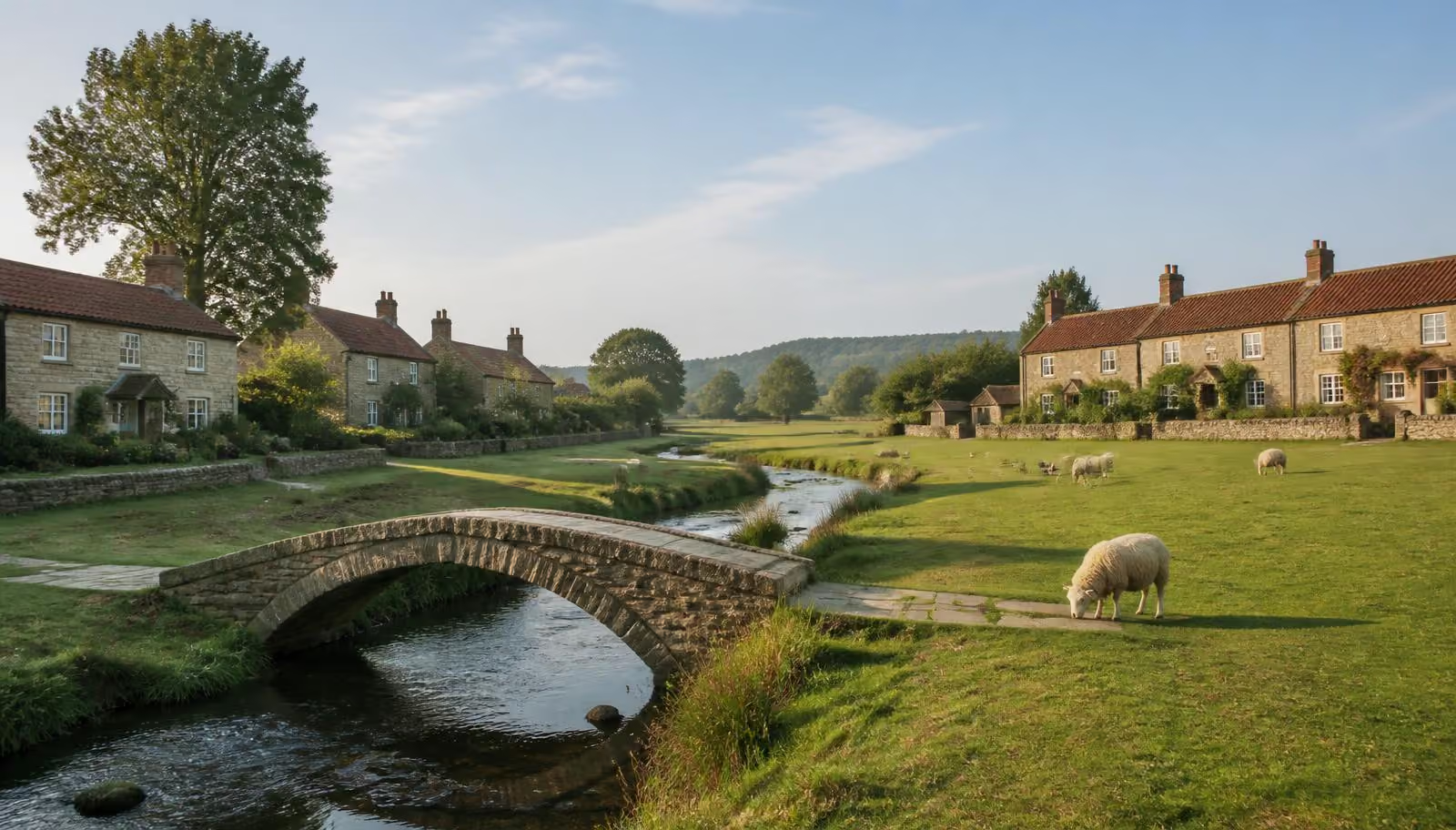
Hutton-le-Hole is the village people picture when they think of the North York Moors: a long, uneven green split by Hutton Beck, sheep keeping the grass short, stone cottages set back on either side, and the moor rising straight behind. It has 151 residents at the last count, one pub, a tea room, a deli and the Ryedale Folk Museum, and it is seven miles north west of Pickering. This page gives the practical facts first, then the museum, the walks and the questions people ask.
Before you go: the practical facts
- Parking
- Moor Lane car park, YO62 6UB, run by the National Park Authority, at the north end of the village. £4.65 up to 3hrs, £6.20 longer. Card or PayByPhone only. Six 7 kilowatt electric chargers, one of them accessible. Toilets in the car park, usually open 7.30am to 5.30pm, accessible with a RADAR key.
- The Crown Inn, beside the museum, has its own car park.
- Do not park on the verges or the green. The green is grazed common and the sheep lie in the road.
- Buses
- the 174 from Kirkbymoorside and Pickering on Mondays only, the 176 from Malton on Wednesdays and the 176 from Kirkbymoorside on Saturdays, all run by Ryedale Community Transport. In summer the Moorsbus M3 stops at the museum on Saturdays and Sundays; check the Moorsbus timetable. No train, and no bus to Farndale.
- Shops
- the Old School House deli and bakery and the museum shop. No post office and no cash machine; the nearest are in Kirkbymoorside.
- Dogs
- on a lead or close control for the sheep and the ground-nesting birds on the moor; allowed in the museum on a lead.
- Mobile signal
- patchy, so the PayByPhone app may not work; the machines take cards.
The green, the beck and the sheep
Hutton-le-Hole has no high street. The cottages face a green that winds for a quarter of a mile with Hutton Beck running down the middle, crossed by small bridges. The sheep that wander down from the moor keep the green cropped like a lawn, and they lie in the road, which is why the roads in have cattle grids. Do not feed them. The Victorians thought the village ill-planned and untidy; the "hole" in the name may refer to the Bronze Age burial hollows on the moor above.
The village was Hoton in the Domesday Book of 1086 and belonged to St Mary's Abbey in York by the late thirteenth century. The Quaker meeting house of 1698 became a house in 1859. There are 29 listed buildings, including the 1833 sundial, the 1845 school and the red telephone box.
Ryedale Folk Museum
The museum is the reason most people come, and the village's National Park information point. It began with an exhibition in August 1963 and was founded on 28 March 1964; its first curator, Bert Frank, was appointed in 1966 and made an MBE in 1986. It spreads over six acres behind the green with more than 20 rescued and reconstructed buildings, from an Iron Age roundhouse to cruck cottages, a thatched manor house, workshops and a village shop.
2026 opening, as published by the museum: 9 to 26 March, Monday to Thursday, 10am to 4pm; 28 March to 30 September daily except Fridays, 10am to 5pm, plus Monday 31 August; 1 October to 29 November, 10am to 4pm. Closed on Fridays throughout, including Good Friday. Adults £12, concessions £10, children aged 4 to 15 £10, under 4 free, family of two adults and two children £40, one adult and two children £30. Every ticket allows unlimited return visits for a year. Dogs on leads are welcome. The 2027 season and prices had not been published when we checked. Allow two hours, longer with children.
Hutton-le-Hole walks
- Hutton-le-Hole to Lastingham: a four-mile circular over the edge of Spaunton Moor to Lastingham, where St Mary's church keeps an eleventh-century crypt under the chancel and the Blacksmiths Arms stands opposite, then back by field paths. Easy, with a pub at each end.
- Spaunton Moor: the road and the paths north out of the village climb straight onto the moor, and the heather is in view from the village edge in August. Keep dogs on the path in spring for the nesting birds.
- Farndale daffodils: the wild daffodils along the River Dove flower in spring, usually from mid-March into April. Park at Low Mill (YO62 7UY, donation box, toilets with RADAR key) or in the private field car park that opens at peak, and walk the riverside path to Church Houses and back. The village has no bus to Farndale.
- Blakey Ridge: the road north climbs onto the ridge between Farndale and Rosedale, with the Lion Inn on the top and the old ironstone railway trackbed for level walking along the dale rim. It is also one of the great heather roads of the Park.
- The National Park's "Hutton le Hole" leaflet has two easy circular walks, and the North York Moors Cycleway passes through.
Eating, drinking and staying
- The pub on Hutton-le-Hole's green, letting three double rooms that each have their own kitchen, bathroom and private terrace. Generally closed Monday and Tuesday in winter, though the letting rooms stay open all year. Hutton-le-Hole is one of the busiest villages in the Park and they ask you to book a table.
- The Barn Guest House and Tea Rooms, next to the museum: breakfasts, light lunches and cakes, six en-suite rooms, dogs free.
- The Old School House deli and bakery for picnics.
- Hours shrink in winter; ring before a special journey.
When to come
Late March to mid-April for the daffodils in Farndale, August for the heather on Spaunton Moor and Blakey Ridge, and any weekday morning for the green to yourself. The Farndale Show is on the August bank holiday Monday (31 August in 2026).
Four honest cautions
- The car park is among the dearest in the Park's list and cash will not work in it.
- The museum is closed on Fridays all season.
- There is a bus on three days a week and none to Farndale.
- The sheep have right of way, and they use it.
Nearby
- Lastingham
- Rosedale Abbey
- Farndale
- Blakey Ridge and the Lion Inn
- Helmsley
- Pickering
- the heather guide
- Villages and towns
Hutton-le-Hole FAQs
- Is parking free in Hutton-le-Hole?
- No. The National Park car park on Moor Lane is £4.65 up to 3hrs, £6.20 longer, card or app only. The Crown Inn has its own car park for customers.
- Can dogs go in Ryedale Folk Museum?
- Yes, on a lead.
- Why are there sheep on the green?
- The green is common grazing land and the sheep come down from Spaunton Moor. They keep the grass short and they lie in the road, which is why the village has cattle grids.
- When are the Farndale daffodils out?
- In spring, usually from mid-March into April, depending on the weather. Low Mill car park, a few miles north, is the start of the riverside walk.
- Is there a bus to Hutton-le-Hole?
- Ryedale Community Transport runs 174 on Mondays and 176 on Wednesdays and Saturdays, excluding bank holidays. The origin differs by service; use the operator timetable. Seasonal Moorsbus is separate.
Sources: North York Moors National Park Authority, Hutton-le-Hole, Lastingham and Appleton-le-Moors page (updated 19 August 2026), car park list (1 September 2026), Farndale page (6 August 2026), agricultural shows (19 June 2026); Ryedale Folk Museum, visit page (16 September 2026) and history page; CAMRA listing for the Crown Inn; The Barn Guest House listing; Moorsbus timetables and bustimes.org for the M3 (8 October 2026); farndale.community; the 2011 census via Nomis for the population; Historic England list entries for the listed buildings; Wikipedia as a lead for the Domesday, Quaker and Victorian references. Checked 10 October 2026.
Sources checked October 2026: Ryedale Community Transport timetables.
Stay near Hutton-le-Hole
The village itself has only a handful of rooms, so most visitors base themselves on the southern edge of the park and drive in.
Browse places to stay