Whitby
Things to do in Whitby
By Jon Cosson · Updated 19 October 2026
The 199 steps and the abbey on the skyline, a working harbour with the fish quay busy at odd hours, three miles of sand running west to Sandsend, and museums that carry Captain Cook, Whitby jet and Dracula. Here are the things to do in Whitby, North Yorkshire, in the order that makes a good day of it.
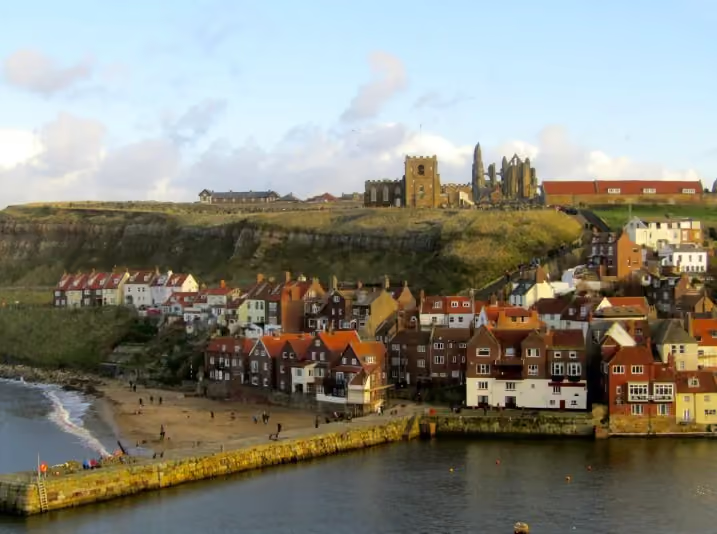
Whitby's old town, harbour and abbey headland from across the Esk.
Whitby at a glance
- Top sights
- 199 steps, Whitby Abbey, the harbour and West Pier
- With kids
- Crabbing off the quay, Whitby Sands, boat trips
- Rainy day
- Whitby Museum, Captain Cook Memorial Museum, jet workshops
- Big event
- Whitby Goth Weekend, twice a year
The 199 steps and St Mary's Church
The steps climb from the foot of Church Street in the old town to the headland, and they are the definitive Whitby walk. There are 199 of them, wide and shallow, with landings at intervals, traditionally the coffin rests where bearers set down their load on the way up to the churchyard. Take them slowly and turn round often: the view back over the pantiles and the harbour improves with every flight.
At the top is St Mary's Church, a startling thing, plain Norman outside, and inside a wooden warren of Georgian box pews, galleries and a three-decker pulpit fitted out, it is said, by ships' carpenters. Its exposed graveyard, headstones scoured blank by the sea wind, is the one Bram Stoker put in the novel. Entry is free.
Dogs: fit dogs manage the steps fine, but the stone can be slippery when wet and the climb is steep. Carry water in summer, and keep dogs on a short lead in the churchyard out of respect for the graves.
Whitby Abbey
Beyond the churchyard stands the ruin itself. There has been a monastery here since 657, when the abbess Hild founded a double house of monks and nuns; it was here that Caedmon, a herdsman, composed the earliest English poem we know by name, and here that the Synod of Whitby in 664 settled the dating of Easter for the English church. What you see now is the 13th-century Benedictine rebuild, shelled by German battlecruisers in 1914 and still standing.
The site is run by English Heritage: there is an admission charge, a visitor centre in the 17th-century Cholmley banqueting house, and a museum of finds. Allow an hour, more if the light is good, and check tickets and opening times on the English Heritage website before you travel. Our Whitby Abbey guide covers the practicalities, and the abbeys and castles guide puts it alongside Rievaulx, Byland and Mount Grace.
Dogs: Dogs on leads are welcome in the abbey grounds (English Heritage). The exterior views from the steps and the headland path are free and dog friendly.
The harbour, the piers and the beach
Whitby is still a working port, and the harbour is the best free entertainment in town: boats landing, the swing bridge opening, and the fish quay busy at odd hours. Walk out along the West Pier to the lighthouse for the classic view back at the abbey, and on a calm day continue onto the wooden pier extension.
The whalebone arch on the West Cliff, a reminder that Whitby was a whaling port, the present arch installed in 2003 as a gift from Alaska, frames the abbey neatly, and the Captain Cook Monument stands beside it. Below, Whitby Sands runs west towards Sandsend: a long, proper family beach with beach huts, reachable by the cliff lift when it is running. At low tide you can walk the sand the whole three miles to Sandsend, check the tide before you commit, and see our beaches guide.
Dogs: welcome on the piers and along the harbourside, on a short lead near the swing bridge and the working quay. There is a seasonal dog ban on the central lifeguarded stretch of Whitby Sands, usually May to September; the Sandsend end is generally more relaxed, but watch the posted signs.
Captain Cook, jet and Dracula
James Cook came to Whitby as an apprentice and learned his trade in the coal trade out of this harbour; all four of his ships of exploration, Endeavour included, were built here. The Captain Cook Memorial Museum occupies the Grape Lane house where he lodged from 1746 with the shipowner John Walker.
Whitby jet was the mourning jewellery of Victorian England, and the town's workshops still cut it today. What it actually is, how old it is and how to tell real jet from a fake is our Whitby jet guide.
There is also Dracula. Stoker holidayed here in 1890, read of the wreck of a Russian schooner in the harbour, and found the name in a Whitby library book. In the novel the Demeter grounds at Tate Hill Sands and the count bounds up the 199 steps as a black dog. Hence the Dracula Experience, the ghost walks, and the twice-yearly Whitby Goth Weekend, when the town fills with extraordinary Victorian and steampunk costume. Book accommodation months ahead for those weekends.
Museums and a bit of history
Whitby's story is longer than the abbey. A monastery was founded on the East Cliff in 657 AD; the ruin standing there now is mainly 13th century. The town below grew on alum, whaling, shipbuilding and fish.
Whitby Museum, in Pannett Park, is the best single place to make sense of it: ammonites and fossil reptiles from the Jurassic cliffs, Captain Cook material, jet, and cabinets of splendid Victorian oddities. The Captain Cook Memorial Museum on Grape Lane occupies Cook's lodgings. The Museum of Whitby Jet explains the fossil gemstone that made the town's Victorian fortune, and the Dracula Experience on Marine Parade plays the story for atmosphere rather than history. Check current opening times for each, several close or shorten hours out of season.
The two halves of the town are worth separating in your head: the East Cliff is the old cobbled fishermen's town of yards and passageways under the abbey, while the West Cliff is genteel and Victorian, laid out for visitors with crescents, gardens and the statue of Cook looking out to sea.
On the water
Read the Whitby boat trips and whale watching guide for operators, boarding points and seasonal advice.
The swing bridge, the fish quay and the piers are free entertainment, but the harbour also runs boat trips, including sailings on a replica of Cook's HMS Endeavour, which was itself Whitby-built, plus fishing and coastal cruises in season. Crabbing off the quayside with a line and a bucket is a Whitby rite of passage. Sailings depend on weather and the season; check on the day.
Walks from Whitby
Sandsend and back (about 6 miles). Flat, easy and lovely, along the beach at low tide or the cliff on the way out and the other on the way home.
Robin Hood's Bay (about 7 miles one way). South on the Cleveland Way from the abbey headland, finishing in Bay Town, with a bus or the level Cinder Track back.
Esk Valley to Grosmont. Follow the river inland and come back by train, or do it the other way round. More routes across the park in our walks section.
Things to do in Whitby with kids
Start on the beach and around the harbour, where boats come and go all day. Count the 199 steps up to St Mary's Church, then carry on to Whitby Abbey on the headland. A trip on the steam railway makes a day of it. More ideas for families are in the North York Moors with kids.
Things to do in Whitby with a dog
Whitby Abbey welcomes dogs on leads, according to English Heritage. On Whitby West Cliff beach, dogs are not allowed in the signposted zones from 1 May to 30 September. On Tate Hill beach, dogs must be on a lead (North Yorkshire Council). See the North York Moors with dogs and our dog-friendly pubs.
Things to do in Whitby for couples
Climb the 199 steps to St Mary's Church and walk on to the abbey. Come back down for the piers at sunset. The beach walk west to Sandsend is an easy few hours (Whitby to Sandsend walk). Finish with Whitby food and drink.
Free things to do in Whitby
The 199 steps cost nothing, nor do the piers, the harbour or the beaches. Pannett Park, home to Whitby Museum, is a public park in the town. Check the tide advice before heading along the sands.
Making a day of it
A good day: park at the Park & Ride, harbour and old town first thing, 199 steps and the abbey mid-morning, fish and chips before the queues build, the West Pier and the sands afterwards. Arrive by steam on the Pickering to Whitby steam train and it is better still, or come over the moor from Pickering and pair the day with the rest of the Heritage Coast.
Things to do in Whitby: FAQs
What is there to see in Whitby?
The 199 steps and St Mary's Church, Whitby Abbey on the East Cliff, and the harbour, piers and beach. Add Captain Cook, jet and Dracula, the town's museums, boat trips and the walks from Whitby.
What is there to do in Whitby with kids?
The beach and the harbour, climbing the 199 steps to St Mary's Church, the abbey on the headland and a ride on the steam railway. For ideas across the wider park, see the North York Moors with kids guide.
Base yourself and drive over
Whitby's own beds book out early and its streets are tight. Plenty of visitors stay inland on the southern edge of the park, around 45 minutes over the moor road, and come for the day.
Browse places to stay