Walks
The Bridestones walk
Hidden above Dalby Forest, the Bridestones are a cluster of huge, weirdly-weathered sandstone outcrops. The North York Moors' quieter answer to Brimham Rocks, cared for by the National Trust as a nature reserve. A short, rewarding circular walk from Staindale brings you right among them.
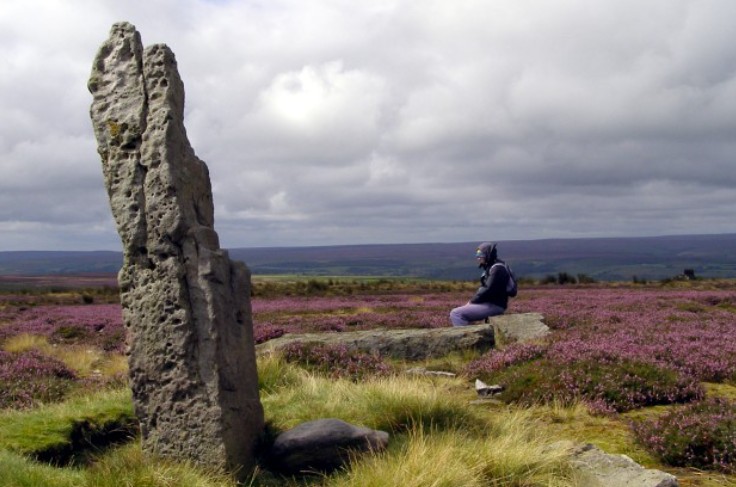
Purple heather in full bloom around the weathered sandstone outcrops of the Bridestones, a fine spot to sit and take in the moor.
The stones themselves
Sculpted over millennia by wind, water and frost picking at bands of harder and softer sandstone, the Bridestones stand like weathered mushrooms and anvils above the valley. The upper group, the High Bridestones. Are the most dramatic, with capstones balanced on narrow pedestals. They sit in a National Trust nature reserve of heather moorland and old oak woodland, and they are far less crowded than the region's better-known landmarks.
Route map and wayfinding
Start: Staindale Lake car park, inside Dalby Forest, reached on the Dalby Forest Drive toll road
Start coordinates: 54.2967, -0.6414
- Staindale Lake car parkPark here and cross to the signed National Trust entrance for the Bridestones.
- Boardwalk and valley bottomFollow the boardwalk across the damp valley floor and through the trees.
- Climb to the Low BridestonesA steady pull uphill brings you to the first line of weathered outcrops.
- The High BridestonesContinue along the ridge to the largest, most photographed rock shapes.
- Return over Needle PointLoop back around the head of the valley and drop through woodland to Staindale.
A downloadable GPX track for this route is still to be added, for now, follow the wayfinding points above alongside OS Explorer OL27.
Wayfinding points are a guide only, check the current National Trust waymarking on site.
Parking, the toll road and facilities
Access is via the Dalby Forest Drive, which is a Forestry England toll road, see our Dalby Forest guide for how the charge and the forest hubs work. Park at Staindale Lake, from where the walk is signed. Toilets and refreshments are at the forest visitor hubs rather than at the reserve itself, so plan a stop on the way in. Charges, opening times and facilities change, so check the current Forestry England and National Trust pages before you set off.
When to go
Late August and September are the showpiece weeks, when the heather around the stones turns purple. Spring brings bluebells and birdsong in the valley woodland, and clear winter days give the sharpest views with almost nobody about. The valley section can be wet underfoot after rain, so wear boots.
Walking with dogs
Dogs are welcome under close control. The reserve is grazed and ground-nesting birds use the open moor through spring and early summer, so keep to a short lead between March and July. Our dog-friendly guide covers the wider picture across the park.
Combine it
Energetic walkers link the Bridestones with the Hole of Horcum for a longer moorland circuit of around ten miles. Otherwise, pair it with the forest trails and dark skies of Dalby Forest, or an afternoon in Thornton-le-Dale just down the road. For a base within easy reach of both, see where to stay.
Bridestones walk FAQs
- How long is the Bridestones walk?
- The usual circular from Staindale is around three miles and takes about an hour and a half to two hours, longer if you stop to scramble among the rocks.
- Do you have to pay to visit the Bridestones?
- The reserve itself is free and cared for by the National Trust, but access is via the Dalby Forest Drive, which is a Forestry England toll road. Check the current charge before you set off.
- Is the Bridestones walk suitable for children?
- Yes. It's a manageable half-day walk with a steady climb, and children love scrambling around the weathered rock shapes at the top.
- Can you take dogs to the Bridestones?
- Yes, under close control. The reserve is grazed and there are ground-nesting birds on the moor in spring and early summer, so a lead is the safe choice from March to July.
- Where do you park for the Bridestones?
- At the Staindale Lake car park within Dalby Forest, from where the waymarked path leads up towards the stones.