Pickering
Pickering Castle
By Jon Cosson · Updated 17 October 2026
Pickering Castle is one of England's best-preserved motte-and-bailey castles, a great grassy mound and stone shell keep set between two baileys, a short walk up from the Market Place and now cared for by English Heritage. It was a royal hunting lodge, a law court and a prison, and it has changed remarkably little since medieval kings rebuilt it in stone.
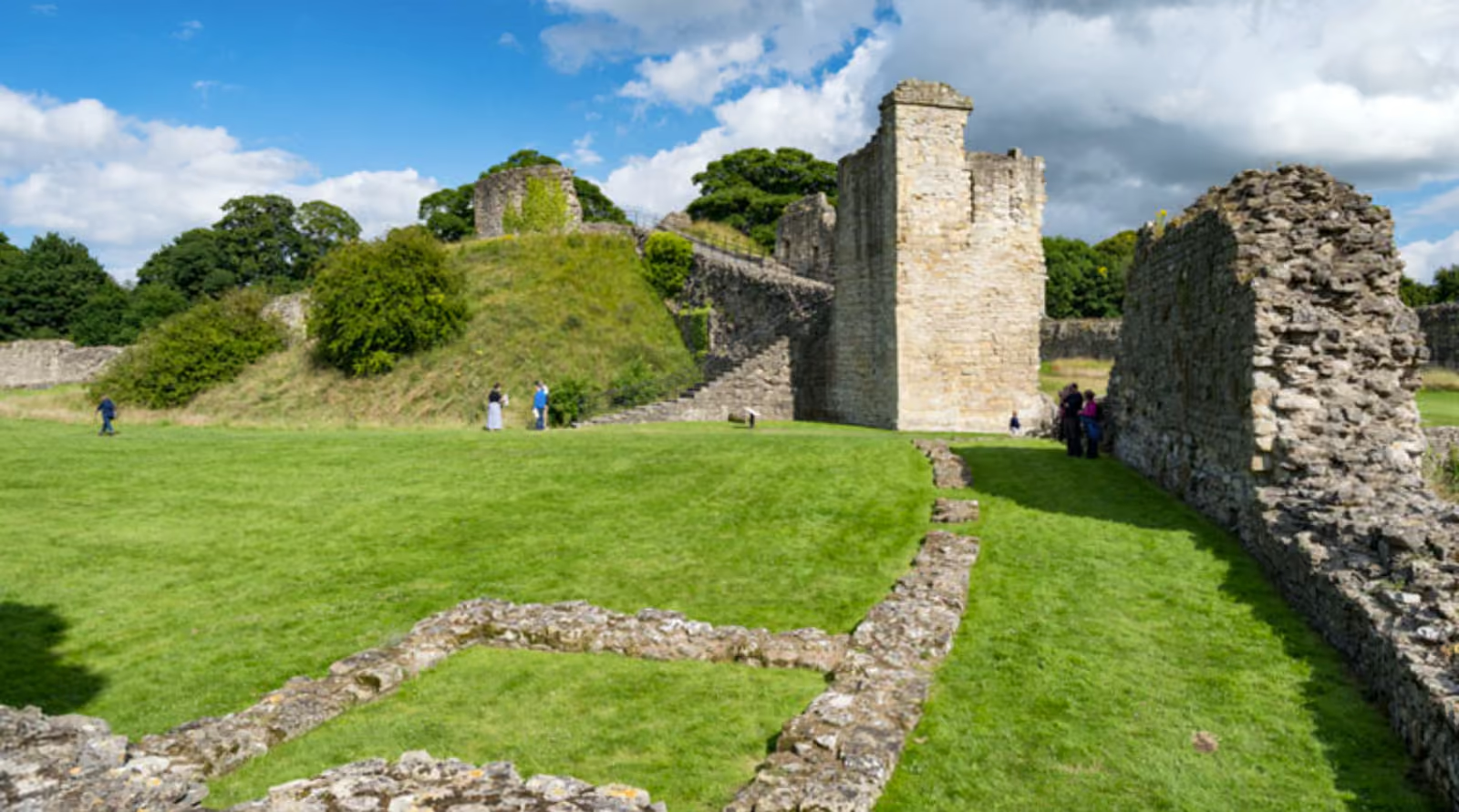
The ruined walls and motte of Pickering Castle, looking up from the bailey.
Pickering Castle at a glance
- What
- A Norman motte-and-bailey castle, cared for by English Heritage
- Where
- Castlegate, Pickering YO18 7AX. A short walk up from the Market Place, parking on site
- Don't miss
- Climbing the motte for the views, the three towers, the chapel exhibition
- Good for
- Families, history, a couple of hours
- Opening & tickets
- Seasonal. Check English Heritage; members free
The castle's story
Pickering Castle was first raised by William the Conqueror in timber and earth in 1069 to 1070, in the years of the Harrying of the North, to hold the routes between the vale and the coast. Later kings rebuilt and extended it in stone: the inner ward, originally the bailey, was rebuilt in the 1180s, the stone shell keep and chapel added on the motte in the early 13th century, and the outer ward, curtain wall and three towers built around 1323 to 1326 under Edward II, followed by the gatehouse, ovens, hall and storehouses.
The castle has long been owned by the Duchy of Lancaster, as it still is, and is managed today by English Heritage. Above all it was a royal hunting lodge and the administrative centre for the vast Forest of Pickering, a “holiday home” for a succession of medieval kings, and also a law court and a prison.
Edmund, Earl of Lancaster held it from 1267; his son Thomas led a revolt against Edward II and was defeated at the Battle of Boroughbridge nearby. Richard II was briefly held prisoner here in 1399. Because it escaped both the Wars of the Roses and the Civil War, the castle survives remarkably little-altered since it was rebuilt in stone, before falling into disrepair from the 16th century.
What to see today
The striking motte, about 20 metres high, carries the shell keep on top, and the motte stairway rewards the climb with panoramic views over the town, the Vale of Pickering and the moors beyond. The layout is unusual too: a double bailey, with the motte set between the two.
Three towers stand almost to their full height, the Mill Tower, which once housed a prison, Rosamund's Tower and Diate Hill Tower. The reconstructed chapel houses an exhibition on the castle's story, with medieval arrowheads, a knife blade, spurs and manacles among the finds displayed.
Look out for the wildlife as well as the stonework: kestrels sometimes nest here, and there are over 45 species of wildflower on the earthworks.
Planning your visit
The castle is on Castlegate, Pickering YO18 7AX, a short walk up from the Market Place, with parking on site. Opening is seasonal, broadly daily through the main season with reduced hours in late autumn and winter, and admission applies, free to English Heritage members. Always check current opening times and prices on the English Heritage website before travelling. Allow an hour or two; there are information boards throughout and a guidebook.
Make a day of it
The castle pairs naturally with the town's other headline sights: the medieval wall paintings in the parish church, the story is in our history and heritage of Pickering guide, plus Beck Isle Museum, a ride on the steam train from Pickering to Whitby and the Monday market. See the full picture in the Pickering town guide, along with things to do, places to eat and shopping.
Use the town as a base for the wider park too: Dalby Forest, the Hole of Horcum up the A169, and the coast at Whitby and Robin Hood's Bay.
Pickering Castle FAQs
Who built Pickering Castle and how old is it?
Pickering Castle was first raised by William the Conqueror in timber and earth in 1069 to 1070, during the Harrying of the North, to control the routes between the Vale of Pickering and the coast. It was rebuilt and extended in stone by later kings, the inner ward in the 1180s, the shell keep and chapel on the motte in the early 13th century, and the outer ward, curtain wall and three towers around 1323 to 1326 under Edward II.
Is Pickering Castle a ruin, what is left to see?
It is a ruin, but a substantial one. The motte stands about 20 metres high with the remains of the shell keep on top, the unusual double-bailey layout is clear on the ground, and three towers, the Mill Tower, Rosamund's Tower and Diate Hill Tower, stand almost to full height. The reconstructed chapel houses an exhibition on the castle's story.
What are Pickering Castle's opening times and prices?
Opening is seasonal, broadly daily through the main season with reduced hours in late autumn and winter, and admission applies, with free entry for English Heritage members. Always check current opening times and prices on the English Heritage website before travelling.
Can you take dogs to Pickering Castle?
Dogs on leads are generally welcome at this English Heritage site, which is largely open earthworks and grass. Check the latest dog policy on the English Heritage page for Pickering Castle before you go.
How long do you need at Pickering Castle?
About one to two hours is right for most visitors, enough to climb the motte, walk the walls and towers, read the information boards and look round the chapel exhibition.
Stay near Pickering Castle
The castle sits a few minutes' walk from the Market Place, so a night in Pickering puts it, the steam railway and the moor road all within easy reach.
Browse places to stay