Classic Cars of the Moors
Two E-Types at Cedar Barn
1963 Jaguar E-Type Series 1 3.8 fixed-head coupeBy Jon CossonCedar Barn, near Pickering
A 1963 Series 1 3.8 and a Series 1 4.2 2+2, parked nose to tail on a bright September afternoon, and what nine inches of wheelbase actually looks like.
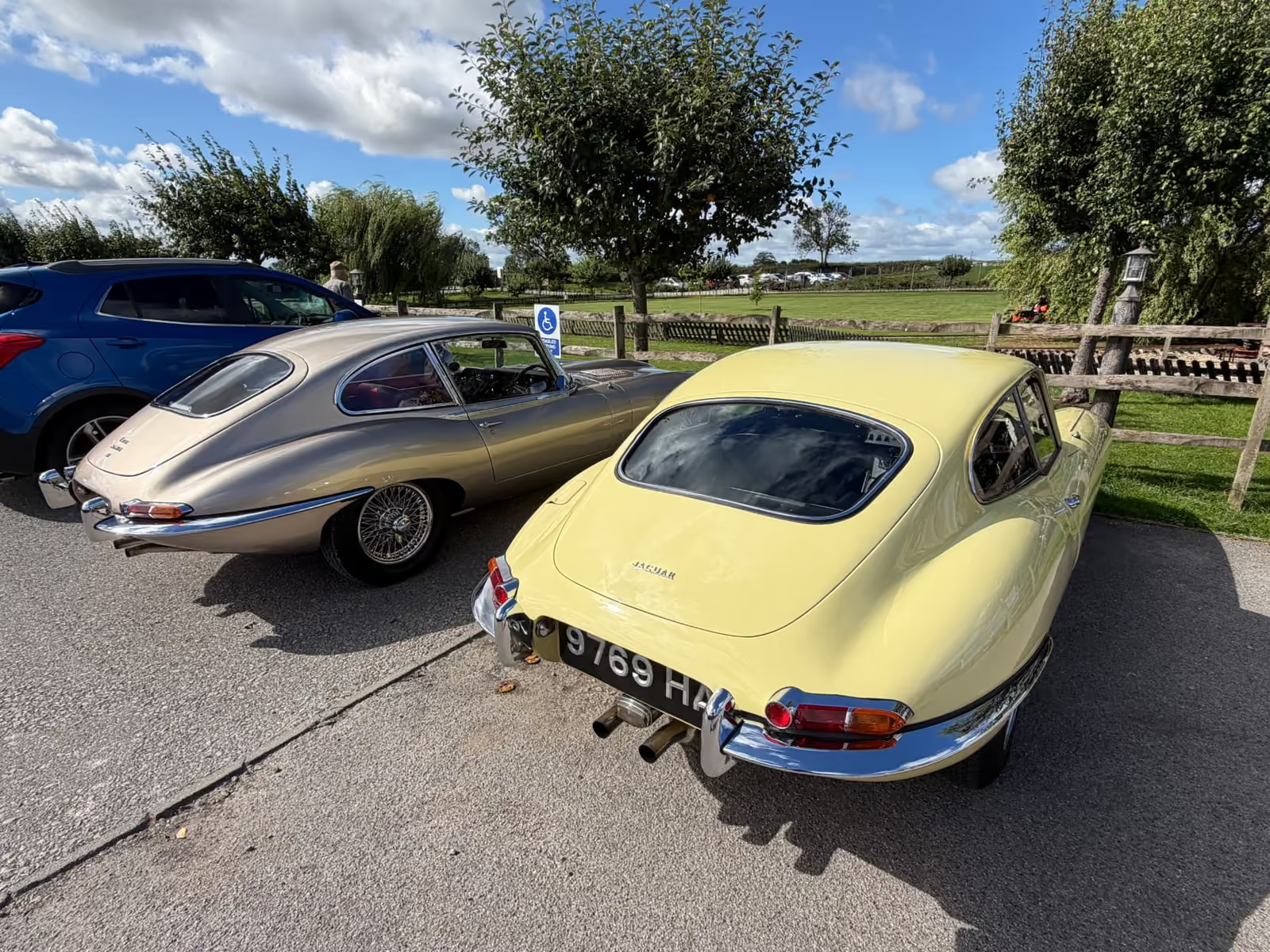
A Primrose 1963 Jaguar E-Type Series 1 3.8 fixed-head coupe parked beside a champagne gold Series 1 4.2 2+2, seen from the rear at Cedar Barn near Pickering
I did not set out to write anything at Cedar Barn. I had gone for the reason anyone goes, and the car came because it was a bright day in early September and the alternative was leaving it in the garage.
What made the afternoon was finding another E-Type already parked there.
The two cars
Mine is a 1963 Series 1 3.8 fixed-head coupe in Primrose with black leather, on chrome wire wheels. The other was a Series 1 4.2 2+2 in champagne gold over red, also on wires, with its distinctive Series 1 covered headlights. It belongs to Stephen, who lives over at Malton.
We parked them together, as you do, and then spent rather longer than either of us intended standing behind them.
What nine inches looks like
You can read the specification of a 2+2 and know, in the abstract, that it sits on a longer wheelbase than the two-seater and carries a taller roof. Knowing it is not the same as seeing it. Parked side by side and photographed from behind, the difference is not subtle at all: the longer car's cabin runs further back, its rear screen is bigger and stands more upright, and the whole roof sits higher over the same basic body.
What surprised me was which way round the effect went. I had assumed the 2+2 would look compromised beside the original, and from most angles the received wisdom is that it does. From directly behind, with the two of them nose to tail on the same piece of tarmac, it simply looks like a different car built for a different purpose, and a perfectly resolved one. The tail is the same tail. The proportions above it are not.
There is a decent argument that the 2+2 is the more honest of the two, in that it admits what an E-Type is actually used for.
A small point about the headlights
The received wisdom is that headlights are the least reliable feature on an E-Type for telling you what you are looking at, and that is right. Open headlights arrived with the changes made from around August 1967, and plenty of otherwise early cars wear them, which is where the collector labels come from.
Read the other way round, though, the covers are worth something here. Stephen's car carries an F registration, which means it was first registered between August 1967 and July 1968, and it has its glass. The likeliest explanation is a car built before those changes and registered a little afterwards, which is ordinary enough and happened to plenty of cars sitting on dealer forecourts. The chassis number would settle it properly, and I did not ask to see it, because we were standing in a car park talking about paint.
The colours
Two cars, two colours that could hardly be less alike, and neither of them anybody's idea of what a Jaguar is supposed to be. Primrose is a colour people either love or find alarming, and I have stopped apologising for it. Stephen's car is a pale champagne gold over red, which in September light is much the quieter of the two, and depending on where you stand, the more expensive-looking.
Photographs are no help here. The two of them came out looking closer than they are, and the gold in particular reads as plain silver on a screen in a way it never does in front of you.
Meeting Stephen
The best part of running an old car is not the car. It is that it gives strangers a reason to talk to you, and gives you a reason to stop and listen.

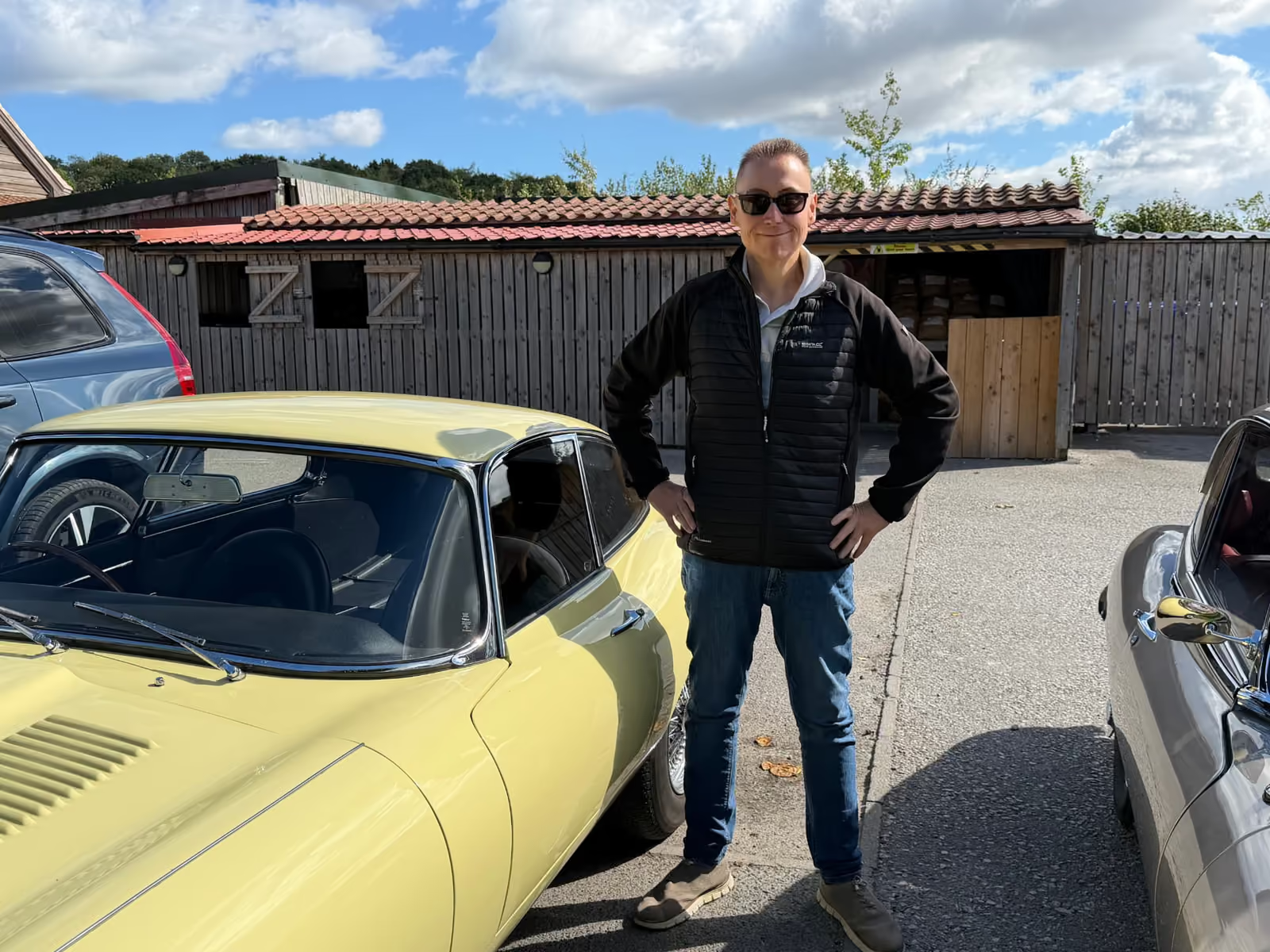
Stephen has been an E-Type man all his life. I have had mine since earlier this year. Standing between the two of them it was clear enough which of us had the longer acquaintance with the model, and equally clear that it makes no difference at all to the conversation. The cars do the introducing, and after that it is just two people who like the same thing.
Neither of us had planned any of it. That is generally how the good days go.
- jaguar
- e-type
- pickering
- malton
- classic cars
- touring
Where to stay in the North York Moors
Self-catering cottages, village inns and farmhouse boltholes right across the moors, from the southern villages to the coast.
Browse places to stay