Touring Journal
Best classic car road trips in Yorkshire
The North York Moors were made for an unhurried drive in something with a bit of character, open heather roads, sudden sea views, steep moorland passes and a pub at the top. Whether you keep a classic or simply love a proper driving road, here are the routes worth planning a day around, and a few practical notes for taking an older car onto the moors.
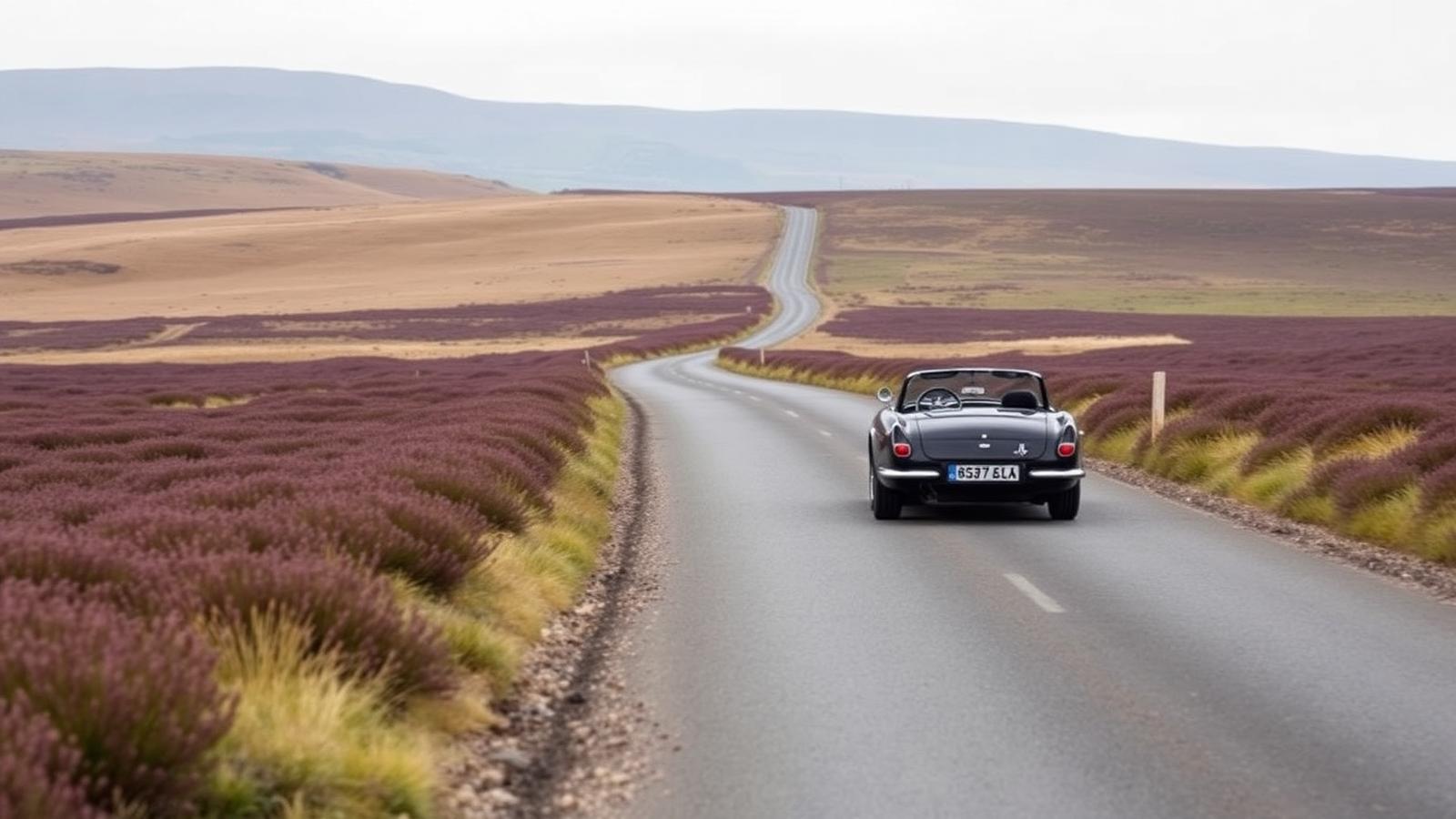
A classic car on a moorland road in the North York Moors.
At a glance
- Headline route: the A169, Pickering to Whitby, about twenty miles of open moor and a sudden sea view.
- Steepest: Rosedale Chimney Bank, around one in eight average, one in three at its worst.
- Best light: late August into September, when the heather is out.
- Fuel: fill up in Pickering, Helmsley or Whitby before you climb.
- Conditions: gradients, closures and restrictions change, check before you set off.
The A169: Pickering to Whitby
The classic run: about twenty miles from Pickering up onto open heather moorland and down to the coast. It climbs steadily past the Hole of Horcum and the great pyramid of the RAF Fylingdales early-warning station, then gives a sudden reveal of the sea before dropping into Whitby, long straights, big dips and sweeping bends throughout. It's regularly ranked among the finest scenic drives in the country. The catch: on warm summer weekends it can become a twenty-mile queue, so go early or out of season.
Sutton Bank and the A170
The A170 skirts the southern edge of the moors between Thirsk and Scarborough, and its set piece is Sutton Bank, a steep climb rising around 160 m in under a mile, with a hairpin bend and a gradient of roughly one in four, topped by what James Herriot called "the finest view in England" and a National Park visitor centre. Note that caravans and larger vehicles are banned from Sutton Bank, and it's a stiff test for an older engine and brakes, take it steady, in a low gear.
Blakey Ridge, across the heart of the moors
For the biggest skies, the high moorland road over Blakey Ridge runs roughly twenty miles across the centre of the park, a sea of heather with vast views over the dales and the Esk Valley, and the Lion Inn, one of the highest pubs in Britain, waiting at the top. It's at its most spectacular in late summer when the heather is out.
Rosedale Chimney Bank, for the brave
One of the steepest roads in England, it shares that title with Cumbria's Hardknott Pass. Climbing between Rosedale Abbey and Hutton-le-Hole, it averages around one in eight (13%) and reaches a fearsome one in three (33%) at its steepest, gaining 568 feet in under a mile. It takes its name from a long-gone ironstone-mine chimney, and cyclists know it as "The Chain Breaker." In a classic it's a genuine test: watch your temperature gauge on the way up and your brakes on the way down, and if you're in any doubt. Or in a heavier car, there are gentler routes over the same moor. Check current conditions before you commit to it.
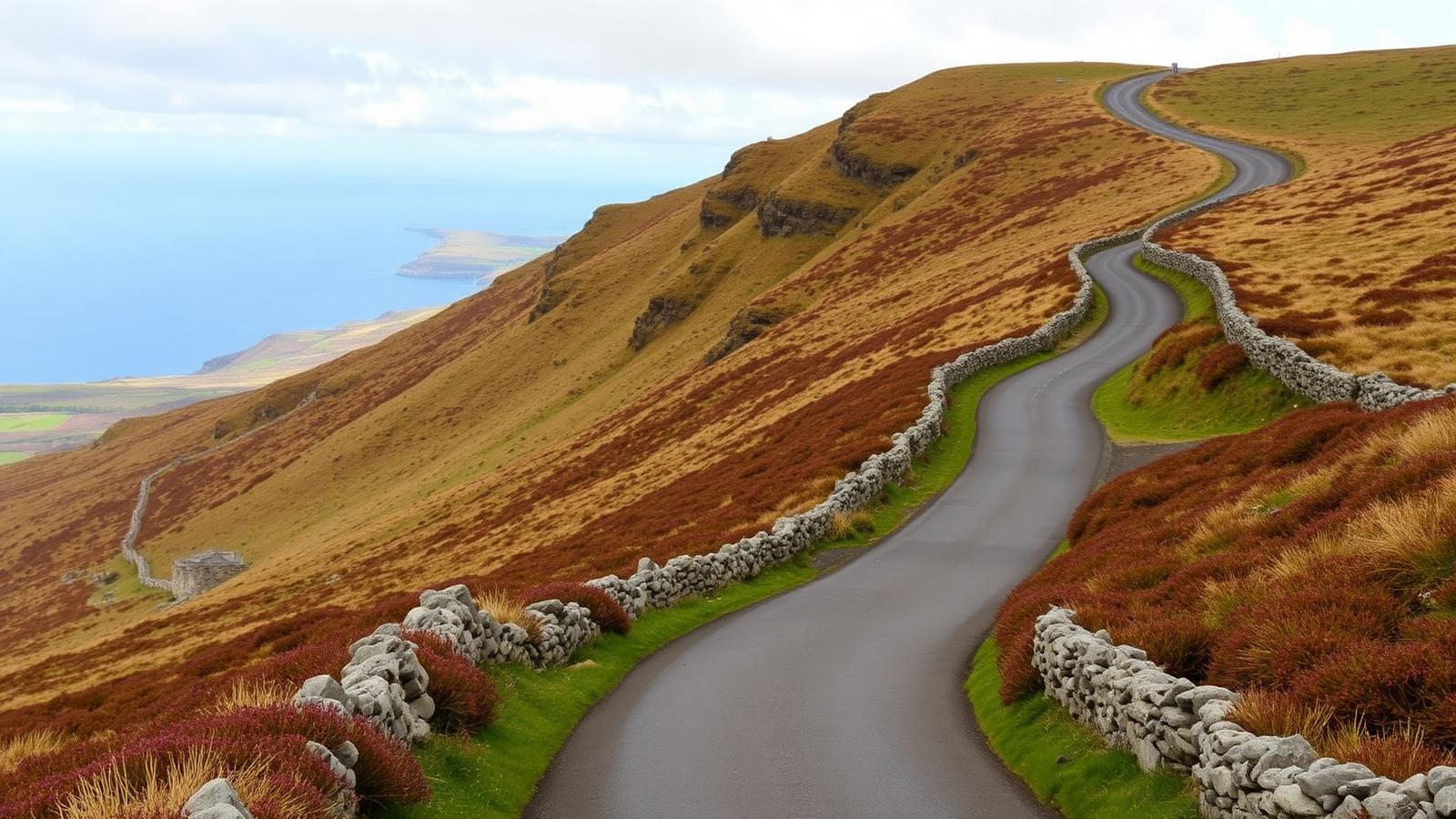
A classic car on the coast road in the North York Moors.
The coast road
For sea air, the coastal run links Scarborough, Whitby and Staithes, with clifftop views at Ravenscar, the steep hairpins down into Robin Hood's Bay, and fish and chips waiting at the end. It's slower going, but a lovely contrast to the open moor, see our guide to the coast for what to stop for.
Quiet lanes: Helmsley, Hutton-le-Hole and Goathland
For the gentlest, most timeless Moors driving, take the back roads between Helmsley and Hutton-le-Hole, or wander the lanes around Goathland. Heartbeat's "Aidensfield", where it's all sheep, drystone walls and honey-stone villages, and nowhere to be in a hurry.
Fuel, phone signal and parking
Fuel exists in Pickering, Helmsley, Kirkbymoorside, Thornton-le-Dale, Whitby, Guisborough and Scarborough, and essentially nowhere on the moor tops. Mobile coverage is patchy above the 300-metre contour, so screenshot your route before you leave. Parking is mostly pay and display, and the big village car parks. Thornton-le-Dale, Hutton-le-Hole, Goathland, fill by mid-morning at weekends. An old car in a tight coastal village is a liability: park high and walk down, particularly at Robin Hood’s Bay and Staithes. One more hill worth knowing: Blue Bank, the long steep descent on the A169 into Sleights before Whitby, change down early and stay off the brakes, because drums fade.
Taking a classic onto the moors
A few practical notes for an older car up here:
- Timing: these roads clog on warm weekends, early mornings and weekdays are blissful; midday in August is a queue.
- Hills: Sutton Bank and Rosedale Chimney Bank are seriously steep, mind your cooling on the climbs and your brakes on the descents, and know what your car is happy with.
- Fuel: filling stations are sparse once you're on the moor, so top up in Pickering, Helmsley or Whitby before you head up.
- Heather: late August into September turns the moor purple, the most photogenic time to drive it. See the moors in autumn.
- Take it slow: single-track sections, passing places, blind crests, sheep and cyclists all ask for patience. This is a landscape to savour, not to hurry.
If the weather turns, the forest drives and trails at Dalby Forest make a sheltered alternative to the high moor.
Frequently asked questions
What is the best classic car road trip in the North York Moors?
The A169 from Pickering to Whitby is the headline run, about twenty miles of open heather moorland, long straights and a sudden sea view before dropping into Whitby. For a steeper challenge, Rosedale Chimney Bank is one of the steepest roads in England.
Is Rosedale Chimney Bank suitable for all classic cars?
No. It averages around one in eight (13%) and reaches roughly one in three (33%) at its steepest. Older cars with marginal cooling or drum brakes should consider gentler routes over the same moor. Always check current conditions before you commit.
When is the best time of year to drive the North York Moors in a classic car?
Late August into September is hard to beat, the heather turns the moor purple and the light is at its most photogenic. Early mornings and weekdays are quieter than warm summer weekends, when the main roads can queue.
Where should I refuel before driving onto the moors?
Fill up in Pickering, Helmsley or Whitby before you climb. Petrol stations are essentially non-existent on the moor tops, so plan your fuel stops before you leave the valleys.
Can caravans or large vehicles use Sutton Bank?
No, caravans and larger vehicles are banned from Sutton Bank on the A170. The climb rises around 160 m in under a mile with a hairpin bend and a gradient of roughly one in four, so it is also a stiff test for older engines and brakes.
What should I carry for a classic car trip on the moors?
Screenshot your route before you leave because mobile coverage is patchy above the 300-metre contour. Carry water, a basic breakdown kit and the number of a classic-friendly recovery service. See our Touring Journal for first-hand route notes.
Tour it in a classic
This guide is written by a local classic-car enthusiast who tours these roads in his own cars, the journeys themselves are written up in the Touring Journal. If you're an owner too, you may enjoy the marque archives behind this site, and if you'd like to base a driving weekend here, see where to stay on the moor edge.